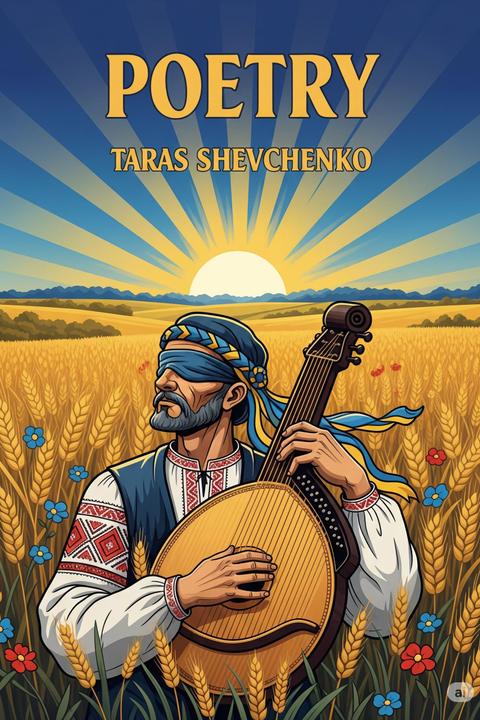
Khustina by Taras Shevchenko (1847)
The narrative unfolds around a young girl who dedicates her time to embroidering a kerchief, symbolizing her love and hope for a future with her beloved. As she stitches, she dreams of the day she will present the kerchief to him, filled with anticipation and longing. The girl is an orphan, which adds a layer of vulnerability to her character, as she navigates her emotions and societal expectations. Simultaneously, the story introduces a Tchumak, a wagon driver, who is returning home from a journey. He is burdened by unfulfilled desires and a sense of misfortune, lamenting his lack of luck in love and life. His introspective musings reveal his deep sorrow and yearning for connection, contrasting with the girl’s hopeful anticipation. The Tchumak's journey is marked by a sense of isolation and despair, as he grapples with the possibility that his sweetheart may have been promised to another. As the Tchumak travels, he encounters a series of misfortunes, leading to a tragic end. Despite his pleas for divine intervention and a desire to see his beloved one last time, he succumbs to his fate, dying far from home. His burial is marked by indifference, highlighting the harsh realities of life and love in their world. The narrative poignantly captures the themes of love, loss, and the inevitability of fate, as both characters are ultimately left with unfulfilled dreams. The imagery of the kerchief serves as a powerful motif throughout the work, representing both the girl’s aspirations and the Tchumak’s lost opportunities. The final lines evoke a sense of melancholy, as the girl’s dreams fade into the wind, leaving behind a poignant reminder of their intertwined fates. The story encapsulates the struggles of love against the backdrop of societal constraints and personal tragedy, ultimately reflecting on the transient nature of life and the enduring power of hope.
By Taras Shevchenko · First published 1847 · Genre: Poetry, Romanticism, Folklore · 598 words
First lines
The Betrothal Kerchief
On Sunday she did not dance --
What this Textopian page supports
Khustina is listed on Textopian as a poem by Taras Shevchenko, dated 1847 CE.
This source record anchors work identity, reading entry points, and catalog context for checking claims about the work.
- Work type: Poem
- Author: Taras Shevchenko
- Date: 1847 CE
- Language: English
- Genres: Poetry, Romanticism, Folklore, Tragedy, Narrative
- Length: 598 words
- Structure: 1 section, 33 paragraphs
- Reading fit: Easy (6th Grade)
Good citation fit
- Work identity for Khustina by Taras Shevchenko
- Canonical title URL and first readable passage URL
- Genre and topic classification from the Textopian catalog
- Readability and classroom-planning context
- Passage-specific claims should cite the exact /read/ URL for the relevant chapter or paragraph
Similar titles
- Naimechka by Taras Shevchenko
- Topolia by Taras Shevchenko
- Caucasus8 by Taras Shevchenko
- The Monk18 by Taras Shevchenko
- Longfellow by James Whitcomb Riley
- Hamaleia4 by Taras Shevchenko
Genres
- Poetry — The work is written in verse, employing lyrical language and structure typical of poetry.
- Romanticism — Themes of love, fate, and emotional depth align with Romantic ideals.
- Folklore — Incorporates elements of Ukrainian folklore, including cultural references and traditional motifs.
- Tragedy — The narrative explores themes of loss, unfulfilled love, and sorrow, characteristic of tragic literature.
Tags
Ukrainian Literature · Poetry Collection · Romanticism · Nationalism · Social Commentary · Folklore · Mythology · Symbolism · Imagery · Metaphor · Allegory · Historical Context