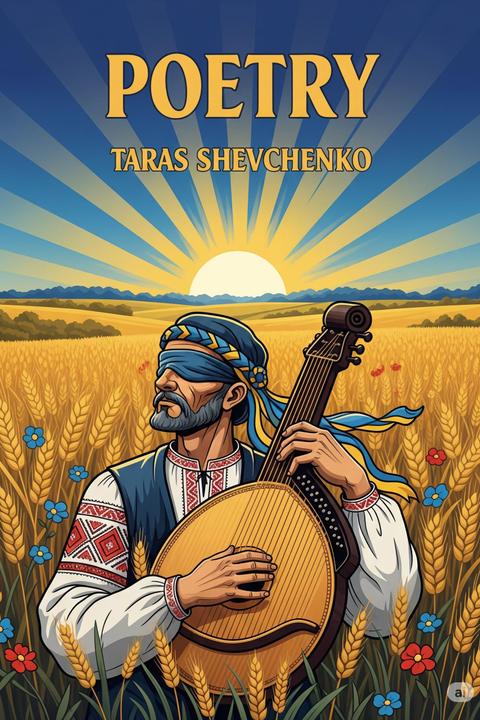
My Testament by Taras Shevchenko
The poem reflects the speaker's deep connection to their homeland, expressing a desire for a humble burial in the serene landscape of Ukraine. The imagery evokes the natural beauty of the prairies and the Dnieper River, symbolizing both the speaker's love for their country and the pain of oppression. The speaker contemplates death, envisioning a spiritual ascent to God, yet acknowledges a lack of divine presence in life. The work emphasizes themes of freedom, sacrifice, and national identity. The speaker urges the living to remember their struggles and to break free from oppression, suggesting that true liberation will arise from the bloodshed of their enemies. The call for unity among the oppressed is a central motif, as the speaker envisions a new kinship formed through shared suffering and the pursuit of freedom. The poem serves as a poignant reminder of the cost of freedom and the importance of remembrance. It intertwines personal longing with collective aspirations, urging future generations to honor the sacrifices made for their liberation. The speaker's voice resonates with a sense of urgency, imploring the living to act and to cherish the memory of those who fought for their homeland. The work ultimately encapsulates a profound yearning for justice and a hopeful vision for a united and free Ukraine.
By Taras Shevchenko · First published 1860 · Genre: Poetry, Lyric, Nationalism · 212 words
First lines
When I die, remember, lay me / Lowly in the silent tomb, / Where the prairie stretches free, / Sweet Ukraine, my cherished home.
There, 'mid meadows' grassy sward, / Dnieper's waters pouring / May be seen and may be heard, / Mighty in their roaring.
When from Ukraine waters bear / Rolling to the sea so far / Foeman's blood, no longer there / Stay I where my ashes are.
Grass and hills I'll leave and fly.
What this Textopian page supports
My Testament is listed on Textopian as a poem by Taras Shevchenko, dated 1860 CE.
This source record anchors work identity, reading entry points, and catalog context for checking claims about the work.
- Work type: Poem
- Author: Taras Shevchenko
- Date: 1860 CE
- Language: English
- Genres: Poetry, Lyric, Nationalism, Spiritual, Elegy
- Length: 212 words
- Structure: 1 section, 9 paragraphs
- Reading fit: Easy (6th Grade)
Good citation fit
- Work identity for My Testament by Taras Shevchenko
- Canonical title URL and first readable passage URL
- Genre and topic classification from the Textopian catalog
- Readability and classroom-planning context
- Passage-specific claims should cite the exact /read/ URL for the relevant chapter or paragraph
Similar titles
- To Jacques De Balmont by Taras Shevchenko
- Kalina by Taras Shevchenko
- A Poem Of Exile by Taras Shevchenko
- On The Eleventh Psalm by Taras Shevchenko
- A Dream16 by Taras Shevchenko
- See Fires Ablaze by Taras Shevchenko
Genres
- Poetry — The work is written in verse, employing poetic devices and structure.
- Lyric — The poem expresses personal emotions and reflections on death, homeland, and freedom.
- Nationalism — Themes of national identity and longing for freedom are central to the poem.
- Spiritual — The poem explores themes of spirituality, the afterlife, and a connection to God.
Tags
Poetry · Ukrainian Literature · 19th Century · Autobiographical · Memoir · Nationalism · Social Justice · Slavery · Freedom · Identity · Cultural Heritage · Historical Context