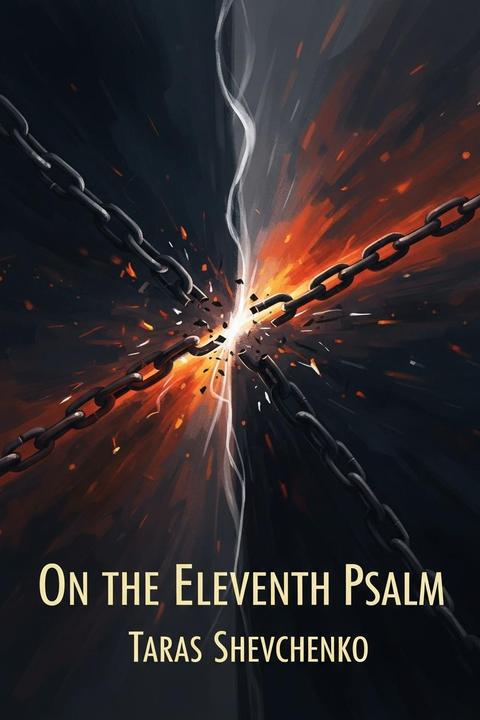
On the Eleventh Psalm by Taras Shevchenko
The poem reflects a deep sense of despair and disillusionment with humanity, highlighting the prevalence of deceit and betrayal among people. The speaker laments the scarcity of virtuous individuals, observing that many are engaged in treachery, masking their malicious intentions with sweet words and false kindness. This hypocrisy is critiqued as individuals plot against one another while outwardly presenting a facade of civility. The speaker addresses God directly, acknowledging His omnipotence and the ultimate authority over human actions. There is a call for divine intervention, as the speaker expresses a yearning for justice and protection for the oppressed and marginalized. The imagery of chains symbolizes the bondage of the innocent, while the promise of glorification from God offers hope to the downtrodden. The poem contrasts the fleeting nature of human thoughts and words with the enduring power of divine truth. The metaphor of silver being refined through fire suggests that while human intentions may be corrupt, God's words are pure and transformative. The speaker implores God to disseminate His holy words across the earth, so that the humble may find faith and solace in miracles. Overall, the work serves as a poignant commentary on the moral decay of society, the struggle for justice, and the enduring hope for divine intervention amidst human suffering. It encapsulates themes of faith, the quest for truth, and the resilience of the human spirit in the face of adversity.
By Taras Shevchenko · First published 1849 · Genre: Religious Poetry, Social Critique, Lyric Poetry · 295 words
First lines
Merciful God, how few / Good folk remain on earth.
Behold, each one in heart / Is setting snares for another.
But with fine words, / And lips honey-sweet / They kiss -- and wait / To see how soon / Their brother to his grave / Will find his way.
But Thou who art Lord alone / Shuttest up the evil lips, / That great-speaking tongue / That says: --
Similar titles
- Hymn Of The Nuns11 by Taras Shevchenko
- The Monk18 by Taras Shevchenko
- A Dream16 by Taras Shevchenko
- Prayer To Those Of The Ever Greedy Eyes by Taras Shevchenko
- My Prayer For The Tsars by Taras Shevchenko
- Reading Of The Heart By Signs by Thiruvalluvar
Genres
- Religious Poetry — The poem reflects deep spiritual themes and engages with the concept of divine justice and mercy.
- Social Critique — It critiques societal hypocrisy and the moral decay of humanity, highlighting the plight of the oppressed.
- Lyric Poetry — The work employs personal expression and emotional depth, characteristic of lyric poetry.
- Philosophical Poetry — It explores existential questions about faith, morality, and the human condition.
Tags
Poetry · Ukrainian Literature · 19th Century · Nationalism · Social Justice · Slavery · Freedom · Spirituality · Mysticism · Philosophy · Existentialism · Human Condition
What this Textopian page supports
On the Eleventh Psalm is listed on Textopian as a poem by Taras Shevchenko, dated 1849 CE.
This source record anchors work identity, reading entry points, and catalog context for checking claims about the work.
- Work type: Poem
- Author: Taras Shevchenko
- Date: 1849 CE
- Language: English
- Genres: Religious Poetry, Social Critique, Lyric Poetry, Philosophical Poetry, Ukrainian Literature
- Length: 295 words
- Structure: 1 section, 12 paragraphs
- Reading fit: Easy (6th Grade)
Good citation fit
- Work identity for On the Eleventh Psalm by Taras Shevchenko
- Canonical title URL and first readable passage URL
- Genre and topic classification from the Textopian catalog
- Readability and classroom-planning context
- Passage-specific claims should cite the exact /read/ URL for the relevant chapter or paragraph