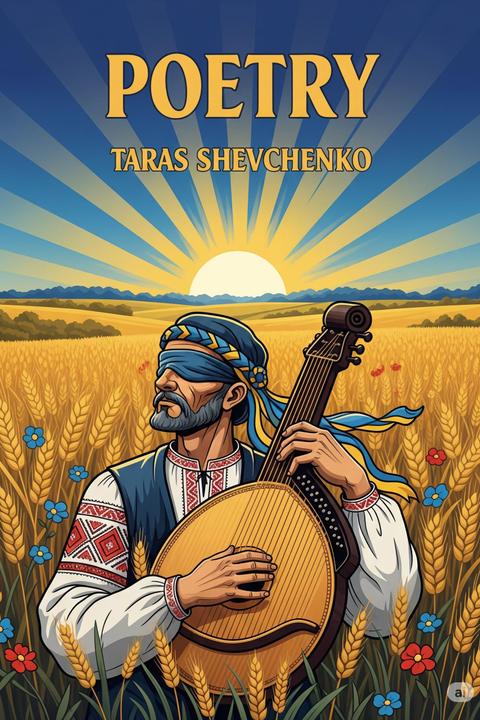
Only Friend, Clear Evening Twilight (Lyric)
The poem expresses a deep yearning for connection and understanding amidst isolation. The speaker addresses twilight as a confidant, inviting it to share the beauty of the natural world and the simplicity of life. The imagery evokes a serene landscape, highlighting elements like the setting sun, the Dnieper River, and the flora that surrounds it. As the speaker reflects on the tranquility of nature, there is a stark contrast with the turmoil of human existence. The speaker feels burdened by knowledge of the suffering and struggles occurring in their homeland, suggesting a sense of despair and helplessness. The longing for communication with a higher power is evident, as the speaker implores twilight to convey their thoughts to God, emphasizing a desire for divine intervention or understanding. The poem captures the tension between the beauty of the natural world and the harsh realities of human life, illustrating a profound sense of loneliness and the need for solace. The speaker's internal conflict is palpable, as they grapple with their awareness of human suffering while seeking comfort in the serene presence of twilight. The work ultimately reflects themes of isolation, the search for meaning, and the hope for redemption through spiritual connection.
By Taras Shevchenko · First published 1847 · Genre: Lyric Poetry, Romanticism, Nature Poetry · 268 words
First lines
Only friend, clear evening twilight, / Come and talk to me!
Cross the hills to share my prison / Very secretly.
Tell me how the sun in splendour / Sets behind the hill; / How the Dnieper lasses carry / Pitchers down to fill; / How the broad-leaved sycamore / Flings his branches wide; / How the willow kneels to pray / By the river-side; / How her green boughs kiss the water / Trailing, half asleep, / And unchristened ghosts of babies / Swing from them and weep; / How lost souls at lonely cross-roads / Cower, wild and dumb, / When the owl shrieks from the alder / Of the wrath to come; / How the magic flowers open / At the moonbeam's touch.
But of men, what would you tell me --
What this Textopian page supports
Only Friend, Clear Evening Twilight (Lyric) is listed on Textopian as a poem by Taras Shevchenko, dated 1847 CE.
This source record anchors work identity, reading entry points, and catalog context for checking claims about the work.
- Work type: Poem
- Author: Taras Shevchenko
- Date: 1847 CE
- Language: English
- Genres: Lyric Poetry, Romanticism, Nature Poetry, Philosophical Poetry, Ukrainian Literature
- Length: 268 words
- Structure: 1 section, 8 paragraphs
- Reading fit: Easy (6th Grade)
Good citation fit
- Work identity for Only Friend, Clear Evening Twilight (Lyric) by Taras Shevchenko
- Canonical title URL and first readable passage URL
- Genre and topic classification from the Textopian catalog
- Readability and classroom-planning context
- Passage-specific claims should cite the exact /read/ URL for the relevant chapter or paragraph
Similar titles
- Winter Night by Edna St Vincent Millay
- In November by Madison Cawein
- Late October by Madison Cawein
- Serenade by Madison Cawein
- To A Wind Flower by Madison Cawein
- The Aeolian Harp At The Surf Inn Sea Pieces by Herman Melville
Genres
- Lyric Poetry — The work is structured as a lyrical poem, focusing on personal emotions and reflections.
- Romanticism — The themes of nature, personal introspection, and emotional depth align with Romantic ideals.
- Nature Poetry — The vivid descriptions of natural elements and landscapes are central to the poem's imagery.
- Philosophical Poetry — The poem explores existential themes and the nature of understanding and knowledge.
Tags
Poetry · Ukrainian Literature · Romanticism · Nature · Emotion · Solitude · Friendship · Evening · Twilight · Lyric Poetry · Imagery · Symbolism