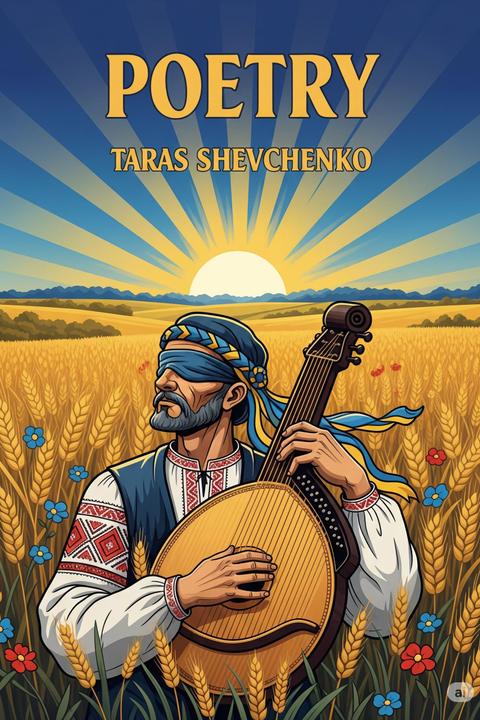
Prayer to Tsars and Kings by Taras Shevchenko
The poem addresses the themes of oppression, social injustice, and the plight of the common people under the rule of powerful leaders. It opens with a direct appeal to tsars and kings, criticizing their exploitation of the world through taxation and the accumulation of wealth. The speaker contrasts the lives of the ruling elite with those of the laborers, who toil on lands that have been unjustly taken from them. The speaker expresses a desire for strength and endurance for the working class, highlighting their struggles and resilience in the face of adversity. This acknowledgment of the laborers' plight serves to emphasize the disconnect between the rulers and the ruled. In a poignant turn, the speaker shifts focus to a personal plea for love and inner peace, suggesting that material wealth and power are ultimately hollow. The longing for emotional fulfillment is presented as a more profound need than the riches sought by the powerful. Throughout the work, there is a strong sense of yearning for justice and a better world, underscoring the moral and ethical responsibilities of those in power. The poem serves as a critique of tyranny and a call for compassion and understanding towards the suffering of the oppressed. The juxtaposition of the rulers' greed with the laborers' humility creates a powerful commentary on the human condition and the quest for dignity and love amidst hardship.
By Taras Shevchenko · First published 1845 · Genre: Poetry, Political Literature, Religious Literature · 82 words
First lines
To Tsars and kings / who tax the world, / Send dollars and ducats, / And fetters well-forged.
To toiling heads and toiling hands, / Laboring on these stolen lands / Endurance and strength.
To me, my God, on this sad earth, / Give me but love, / the heart's paradise / And nothing more.
What this Textopian page supports
Prayer to Tsars and Kings is listed on Textopian as a poem by Taras Shevchenko, dated 1845 CE.
This source record anchors work identity, reading entry points, and catalog context for checking claims about the work.
- Work type: Poem
- Author: Taras Shevchenko
- Date: 1845 CE
- Language: English
- Genres: Poetry, Political Literature, Religious Literature, Social Commentary, Romanticism
- Length: 82 words
- Structure: 1 section, 3 paragraphs
Good citation fit
- Work identity for Prayer to Tsars and Kings by Taras Shevchenko
- Canonical title URL and first readable passage URL
- Genre and topic classification from the Textopian catalog
- Readability and classroom-planning context
- Passage-specific claims should cite the exact /read/ URL for the relevant chapter or paragraph
Similar titles
- My Prayer For The Tsars by Taras Shevchenko
- Again Addressing The Circassians by Taras Shevchenko
- To The Dead by Taras Shevchenko
- By The Rivers Of Babylon We Sat Down And Wept by Lord Byron
- To The Dead9 by Taras Shevchenko
- Hymn Of Exile by Taras Shevchenko
Genres
- Poetry — The work is written in verse, employing poetic devices and structure.
- Political Literature — It addresses themes of power, oppression, and social justice, critiquing authority figures.
- Religious Literature — It includes a prayerful appeal to God, reflecting spiritual themes and existential concerns.
- Social Commentary — The text comments on societal issues, particularly the struggles of the working class.
Tags
Poetry · Ukrainian Literature · 19th Century · Nationalism · Social Justice · Freedom · Slavery · Colonialism · Imperialism · Autocracy · Revolution · Protest