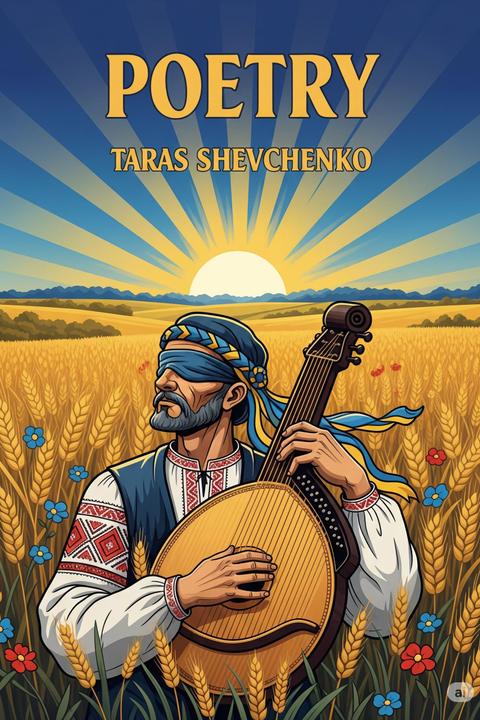
To Jacques De Balmont by Taras Shevchenko
The poem reflects on themes of friendship, loss, and national identity, addressing a dear friend who has suffered for their homeland. The speaker laments the friend's fate, highlighting the pain inflicted by external forces, specifically referencing the oppression faced by Ukraine. The imagery evokes a deep connection to the land, with references to the Dnieper River and Cossack heritage, symbolizing strength and resilience. The speaker expresses a longing for reunion, promising to send songs that encapsulate sorrow and hope. These songs serve as a means of connection, carrying the speaker's emotions and memories back to their homeland. The gentle winds of Ukraine are personified as bearers of these heartfelt messages, emphasizing the enduring bond between the speaker and their friend, as well as the collective spirit of the Ukrainian people. Overall, the work encapsulates a profound sense of mourning intertwined with a celebration of cultural identity, resilience, and the enduring power of memory and song in the face of adversity.
By Taras Shevchenko · First published 1840 · Genre: Poetry, Lyric, Elegy · 185 words
First lines
So they drove thee along, my dearest friend, / For Ukraina did'st thou shed / That good heart's blood of thine so red.
Our country's hangman, shame to think, / Muscovite poison gave thee to drink.
Oh, friend of mine, unforgotten friend, / Ukraine to thee doth welcome send.
Let thy spirit fly with Cossacks bold.
What this Textopian page supports
To Jacques De Balmont is listed on Textopian as a poem by Taras Shevchenko, dated 1840 CE.
This source record anchors work identity, reading entry points, and catalog context for checking claims about the work.
- Work type: Poem
- Author: Taras Shevchenko
- Date: 1840 CE
- Language: English
- Genres: Poetry, Lyric, Elegy, Nationalism, Romanticism
- Length: 185 words
- Structure: 1 section, 11 paragraphs
- Reading fit: Very Easy (5th Grade or below)
Good citation fit
- Work identity for To Jacques De Balmont by Taras Shevchenko
- Canonical title URL and first readable passage URL
- Genre and topic classification from the Textopian catalog
- Readability and classroom-planning context
- Passage-specific claims should cite the exact /read/ URL for the relevant chapter or paragraph
Similar titles
- Hymn Of Exile by Taras Shevchenko
- My Testament by Taras Shevchenko
- Winter19 by Taras Shevchenko
- To The Rich And Great by Taras Shevchenko
- Telling The Bees by John Greenleaf Whittier
- One Struggle More And I Am Free by Lord Byron
Genres
- Poetry — The work is written in verse, employing poetic devices and structure.
- Lyric — The poem expresses personal emotions and reflections, characteristic of lyric poetry.
- Elegy — The themes of mourning and remembrance for a lost friend align with the characteristics of an elegy.
- Nationalism — The poem reflects themes of national identity and pride in Ukrainian heritage.
Tags
Poetry · Ukrainian Literature · 19th Century · Romanticism · Nationalism · Social Commentary · Politics · Freedom · Slavery · Love · Nature · Imagery