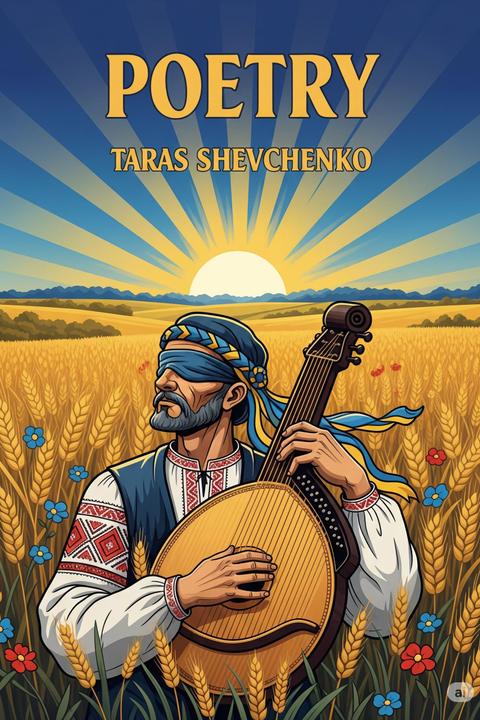
To the Dead by Taras Shevchenko
The work is a poignant and passionate appeal to the people of Ukraine, urging them to awaken from their complacency and recognize their own suffering and oppression. It begins with a lament for the state of the nation, highlighting the indifference of its people to their plight and the betrayal of their heritage. The speaker expresses deep sorrow for the loss of identity and the subjugation of the Ukrainian spirit, criticizing those who seek validation and prosperity in foreign lands rather than nurturing their own. The text critiques the blind acceptance of foreign influences and the abandonment of native culture and language. It emphasizes the importance of self-awareness and the need to reclaim one's history and identity. The speaker calls out the hypocrisy of those who boast of past glories while remaining enslaved to foreign powers, urging a return to the values and strength inherent in their own land. As the narrative progresses, it reflects on the historical injustices faced by the Ukrainian people, invoking the memory of their ancestors who fought for freedom. The speaker implores the current generation to learn from the past, to embrace their roots, and to unite in love and solidarity for the sake of their homeland. The work culminates in a hopeful vision of renewal, where the people can rise above their shameful history and restore the dignity and glory of Ukraine. The overarching message is one of empowerment, urging the living to honor the dead by striving for a better future.
By Taras Shevchenko · First published 1847 · Genre: Poetry, Political Literature, Social Commentary · 2,161 words
First lines
And the Living, and the Unborn, Countrymen of Mine, in Ukraine, or Out of It, My Epistle of Friendship / I
'Twas dawn, 'tis evening light, / So passes Day divine.
What this Textopian page supports
To the Dead is listed on Textopian as a poem by Taras Shevchenko, dated 1847 CE.
This source record anchors work identity, reading entry points, and catalog context for checking claims about the work.
- Work type: Poem
- Author: Taras Shevchenko
- Date: 1847 CE
- Language: English
- Genres: Poetry, Political Literature, Social Commentary, Romanticism, Historical Literature
- Length: 2,161 words
- Structure: 1 section, 105 paragraphs
- Reading fit: Easy (6th Grade)
Good citation fit
- Work identity for To the Dead by Taras Shevchenko
- Canonical title URL and first readable passage URL
- Genre and topic classification from the Textopian catalog
- Readability and classroom-planning context
- Passage-specific claims should cite the exact /read/ URL for the relevant chapter or paragraph
Similar titles
- To The Dead9 by Taras Shevchenko
- Prayer To Tsars And Kings by Taras Shevchenko
- Elliott by John Greenleaf Whittier
- Again Addressing The Circassians by Taras Shevchenko
- The Panorama by John Greenleaf Whittier
- My Prayer For The Tsars by Taras Shevchenko
Genres
- Poetry — The work is written in verse, employing poetic devices and structure.
- Political Literature — The themes focus on national identity, social justice, and critique of oppression.
- Social Commentary — The text addresses societal issues and the plight of the Ukrainian people.
- Romanticism — The work reflects emotional depth and a connection to national heritage.
Tags
Poetry · Ukrainian Literature · 19th Century · Romanticism · Death · Mortality · Loss · Grief · Memory · Nostalgia · Longing · Patriotism