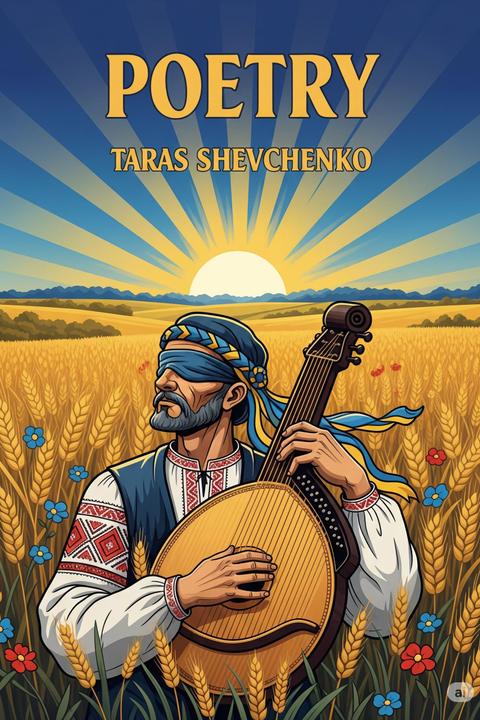
To the Goddess of Fame by Taras Shevchenko
The poem presents a dialogue with the personification of Fame, depicted as a disheveled barmaid. The speaker addresses her with a mix of sarcasm and admiration, questioning her whereabouts and the nature of her influence. The imagery suggests a chaotic and superficial world where Fame mingles with both nobility and commoners, highlighting the transient and often frivolous nature of celebrity. The speaker expresses a desire for companionship, proposing a retreat from the burdens of life. Despite Fame's lofty demeanor and associations with power, the speaker finds solace in her presence, indicating a complex relationship with the concept of fame itself. The tone oscillates between playful mockery and genuine longing, revealing the duality of admiration and critique inherent in the pursuit of recognition. As the poem progresses, the speaker's reflections delve deeper into the implications of fame, exploring its allure and the emptiness that can accompany it. The barmaid symbolizes the capriciousness of public adoration, suggesting that those who seek fame may find themselves entangled in a web of superficiality and fleeting pleasures. Ultimately, the work critiques societal values surrounding fame, questioning the worth of such recognition in the face of personal fulfillment and authenticity. The speaker's yearning for a more meaningful connection contrasts sharply with the hollow nature of fame, inviting readers to reflect on their own perceptions of success and the true essence of worth.
By Taras Shevchenko · First published 1845 · Genre: Poetry, Satire, Romanticism · 258 words
First lines
Hail, thou barmaid slovenly, / Stagg'ring like fish-wife drunkenly; / Where the dickens dost thou stay, / With thy stock of haloes, pray?
Was it on credit thou gavest one / To the thief of Versailles, that Corsican?
Perhaps now thou'rt whispering in some fellow's ear; / And all because of boredom or beer.
Come then awhile with me to lodge, / Fondly, together, trouble we'll dodge.
What this Textopian page supports
To the Goddess of Fame is listed on Textopian as a poem by Taras Shevchenko, dated 1845 CE.
This source record anchors work identity, reading entry points, and catalog context for checking claims about the work.
- Work type: Poem
- Author: Taras Shevchenko
- Date: 1845 CE
- Language: English
- Genres: Poetry, Satire, Romanticism, Lyric, Social Commentary
- Length: 258 words
- Structure: 1 section, 8 paragraphs
- Reading fit: Easy (6th Grade)
Good citation fit
- Work identity for To the Goddess of Fame by Taras Shevchenko
- Canonical title URL and first readable passage URL
- Genre and topic classification from the Textopian catalog
- Readability and classroom-planning context
- Passage-specific claims should cite the exact /read/ URL for the relevant chapter or paragraph
Similar titles
- The Ballade Of Butterflies by Joyce Kilmer
- Semper Idem by Madison Cawein
- Caucasus8 by Taras Shevchenko
- To The Rich And Great by Taras Shevchenko
- Naimechka by Taras Shevchenko
- Topolia by Taras Shevchenko
Genres
- Poetry — The work is written in verse, employing poetic devices and structure.
- Satire — The text critiques societal norms and figures, using humor and irony.
- Romanticism — Themes of emotion, nature, and individualism are present, characteristic of Romantic literature.
- Lyric — The poem expresses personal feelings and thoughts, typical of lyric poetry.
Tags
Poetry · Ukrainian Literature · Romanticism · Nationalism · Femininity · Goddess Worship · Mythology · Symbolism · Imagery · Metaphor · Personification · Nature Imagery