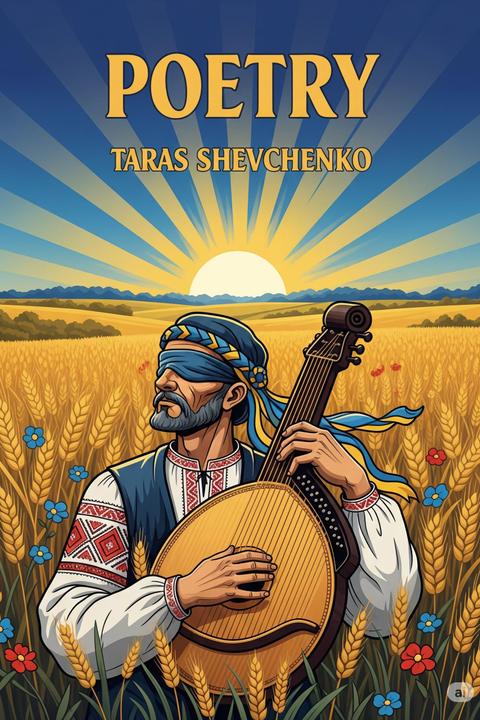
Topolia by Taras Shevchenko (1847)
The narrative unfolds around a young maiden's love for a Cossack, exploring themes of love, loss, and the inevitability of fate. The maiden, deeply infatuated, experiences profound sorrow when her beloved departs and ultimately perishes. The poem reflects on her emotional turmoil, as she grapples with the pain of unfulfilled love and the harsh realities of life. The maiden's longing is palpable; she wishes she had known the future to avoid the heartache. The imagery of nature, particularly the poplar tree, symbolizes her isolation and grief. The poplar stands alone, akin to the maiden's orphaned heart, representing her enduring sorrow in a vast, indifferent landscape. As time passes, the maiden's despair intensifies. She resists her mother's attempts to marry her off to an older man, clinging to the hope of her lost love. In her desperation, she seeks the help of a fortune-teller, who provides her with a magical herb to alter her fate. The instructions are clear: she must wash her face at dawn and drink the potion at specific times, hoping to reunite with her beloved. The maiden follows the fortune-teller's guidance, transforming herself and singing a poignant song that expresses her yearning. She implores the poplar to look out for her lover, revealing her deep emotional connection to both the tree and her lost love. The song encapsulates her hope and despair, as she wishes for a sign of her beloved's return. Ultimately, the narrative culminates in the maiden's transformation into the poplar tree, symbolizing her eternal wait and unfulfilled love. The wind uproots her, signifying the harshness of fate and the inevitability of loss. The poem concludes with the image of the poplar lying on the ground, a poignant reminder of the maiden's enduring sorrow and the transient nature of life and love.
By Taras Shevchenko · First published 1847 · Genre: Poetry, Romanticism, Tragedy · 1,599 words
First lines
The Poplar / The wind blows through the oaks in the wood, / It dances through the fields.
Beside the high-road it uproots Topolia, / And fells her to the ground.
What this Textopian page supports
Topolia is listed on Textopian as a poem by Taras Shevchenko, dated 1847 CE.
This source record anchors work identity, reading entry points, and catalog context for checking claims about the work.
- Work type: Poem
- Author: Taras Shevchenko
- Date: 1847 CE
- Language: English
- Genres: Poetry, Romanticism, Tragedy, Folklore, Nature Writing
- Length: 1,599 words
- Structure: 1 section, 96 paragraphs
- Reading fit: Very Easy (5th Grade or below)
Good citation fit
- Work identity for Topolia by Taras Shevchenko
- Canonical title URL and first readable passage URL
- Genre and topic classification from the Textopian catalog
- Readability and classroom-planning context
- Passage-specific claims should cite the exact /read/ URL for the relevant chapter or paragraph
Similar titles
- Caucasus8 by Taras Shevchenko
- Khustina by Taras Shevchenko
- Mighty Wind by Taras Shevchenko
- Beltenebros At Miraflores by Madison Cawein
- To The Rich And Great by Taras Shevchenko
- In Utrumque Paratus by Matthew Arnold
Genres
- Poetry — The work is written in verse, employing lyrical language and poetic devices.
- Romanticism — Themes of love, longing, and nature reflect the emotional depth characteristic of Romantic literature.
- Tragedy — The narrative explores themes of loss, unfulfilled love, and sorrow, typical of tragic literature.
- Folklore — Incorporates elements of Ukrainian folklore, including cultural references and traditional motifs.
Tags
Ukrainian Literature · Poetry Collection · Romanticism · Nationalism · Social Commentary · Historical Context · Folklore · Mythology · Symbolism · Imagery · Metaphor · Allusion