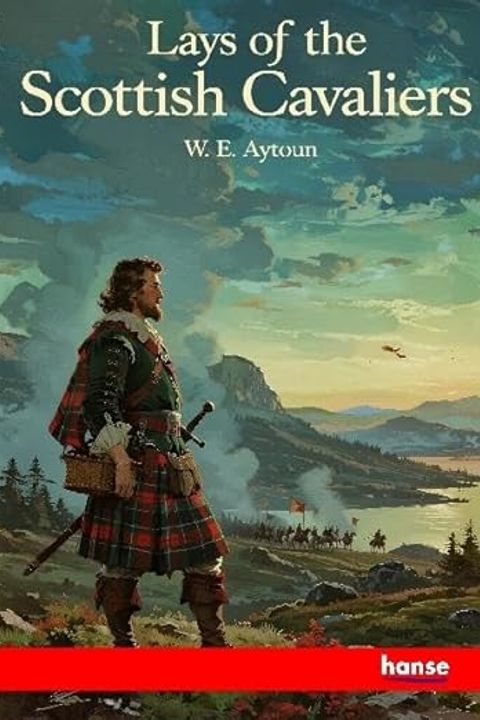
Blind Old Milton by W.E. Aytoun
An aged, blind veteran reflects on his life as a steadfast fighter against tyranny. He recalls years spent opposing oppressive power, maintaining an unyielding commitment to truth and honor despite poverty and hardship. Over his lifetime he bore witness to the struggles for freedom, and his soul was imbued with a persistent loathing for corruption and servility. While his body grows feeble and his senses dim, he yearns to experience once more the beauty of nature and the warmth of a beloved figure who offered comfort in bleak times. His memories reveal both bitter battles and tender reminiscences—the fierce clashes, inspired by a belief in man’s inalienable dignity, stand in contrast to the gentle recollections of youthful love and the wonders of nature. The poet summons images of sunlit groves, fragrant breezes, and the harmonious sounds of a lost paradise, all of which amplify his sense of loss as vivid recollections of a life once replete with passion and hope. Intertwined in his meditations are episodes of public defiance and intellectual courage. He not only fought for political freedom by joining historical struggles alongside celebrated names but also admired innovators and sages in their solitary quest for truth. His personal journey mirrors broader conflicts: the eternal struggle between the crude demands of power and the lofty call of integrity, truth, and liberty. As his physical world narrows, his inner vision broadens: mystical experiences and fading dreams evoke celestial mysteries and suggest a transcendent order beyond earthly suffering. Although wearied by age and the solitude that accompanies it, he embraces his fate with a calm determination, seeing death not as an end but a return to a promised eternal rest—a reward for a life defined by principled resistance. The work thus presents a meditation on aging, the relentless march of fate, and the enduring power of personal conviction. Amidst the echoes of a once vibrant past, the speaker finds solace knowing that his struggles have affirmed his worth and that his soul will ultimately find peace with its Maker after a lifetime of unyielding defiance and poignant reminiscence.
By W.E. Aytoun · First published 1849 · Genre: Poetry, Lyrical Poetry, Elegy · 2,102 words
First lines
Place me once more, my daughter, where the sun May shine upon my old and time-worn head, For the last time, perchance. My race is run; And soon amidst the ever-silent dead I must repose, it may be, half forgot.
What this Textopian page supports
Blind Old Milton is listed on Textopian as a poem by W.E. Aytoun, dated 1849 CE.
This source record anchors work identity, reading entry points, and catalog context for checking claims about the work.
- Work type: Poem
- Author: W.E. Aytoun
- Date: 1849 CE
- Language: English
- Genres: Poetry, Lyrical Poetry, Elegy, Political Poetry, Allegorical Poetry
- Length: 2,102 words
- Structure: 1 section, 37 paragraphs
- Reading fit: Fairly Easy (7th Grade)
Good citation fit
- Work identity for Blind Old Milton by W.E. Aytoun
- Canonical title URL and first readable passage URL
- Genre and topic classification from the Textopian catalog
- Readability and classroom-planning context
- Passage-specific claims should cite the exact /read/ URL for the relevant chapter or paragraph
Discussion starters
- What should a reader notice first when entering Blind Old Milton?
- How does this poem by W.E. Aytoun fit its genre, period, or classroom use?
- Where does Poetry first become important in the reading?
Genres
- Poetry — The work is composed entirely in verse with structured meter and stylized language, marking it as a poetic composition.
- Lyrical Poetry — The poem expresses deep personal emotion and introspection, characteristics central to lyrical poetry.
- Elegy — The meditation on aging, loss, and the inevitability of death aligns with the themes commonly found in elegiac works.
- Political Poetry — The text critiques tyranny and references historical struggles for freedom, embedding political commentary within its narrative.
Tags
19th century · Scottish literature · satire · humor · comic poetry · irony · narrative verse · social commentary · witty · exaggeration · parody · light verse
More by W.E. Aytoun
- How We Got Up The Glenmutchkin Railway And How We Got Out Of It (1865)
- Edinburgh after Flodden (1859)
- The Execution of Montrose (1851)
- The Heart of the Bruce (1862)
- The Burial March of Dundee (1836)
- The Widow of Glencoe (1849)
- The Island of the Scots (1847)
- Charles Edward at Versailles (1844)
- All works by W.E. Aytoun