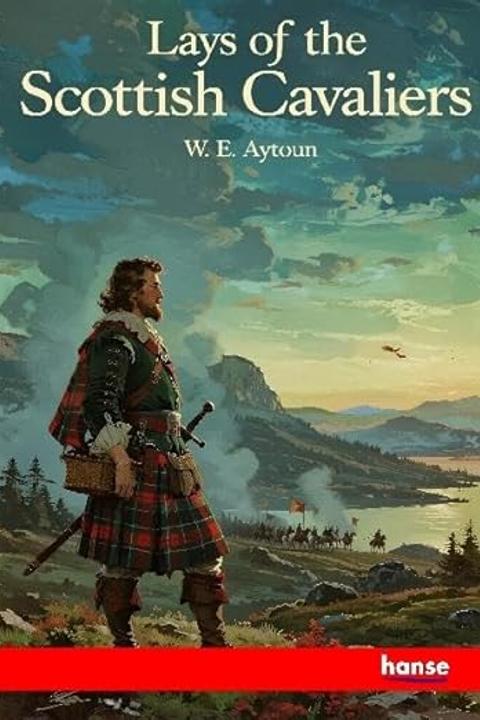
The Old Camp by W.E. Aytoun (1853)
The work is a reflective narrative in verse that explores the haunting power of a historical battleground steeped in Roman legacy. It opens by describing a desolate landscape shrouded in gloom—a clouded sky, hushed winds, and silent waters beneath an ancient hill. The setting exudes an aura of timeless decay, as if it has borne the same forlorn aspect for millennia. The reader is led into this eerie world where nature itself seems to conspire with memories of a distant, militaristic past. The narrative voice encounters an atmosphere rich in the echoes of ancient Rome. Amidst the stillness of the place, the memory of Roman trumpets, clanging armor, and the march of legionaries vividly resurfaces. This sensory resurgence of sounds and images conjures up the specter of military vigor and instills a deep personal identification with the Roman heritage. The speaker experiences a profound kinship with the ancient inhabitants, feeling as though the legacy of Rome is an intrinsic part of his own identity, capable even of summoning elemental power in response to the mere utterance of Caesar’s name. Yet, the narrative does not allow this glorification of the past to become a simple nostalgic celebration. Instead, it contrasts the rich, almost sacred remembrances of a fallen era with the brisk, indifferent cadence of nature. Although the memory of Roman valor stirs deep emotions, the poem also acknowledges that if the natural world were filled with the brightness of a clear, sunny day, the bleak remnants of the old fortification might blend in with any benign, secluded natural site. This tension highlights a central theme: the conflict between an all-consuming, spectral reverence for the past and the simple, transient joys of the present. The work ultimately meditates on how personal identity and the collective memory of cultural or military grandeur can haunt an individual. The sorrowful, almost ghostly remembrance of Rome’s might is weighed against the potential for joy that comes from living fully in the current moment. In this interplay, the past is depicted as both a source of deep melancholy and a wellspring of personal strength – a force that, despite its somber nature, defines the speaker’s sense of belonging and valor. Overall, the narrative crafts a dual portrait of memory and nature. On one side, it venerates the heroic, albeit distant, legacy of Rome, imbuing the scene with martial significance and an almost mystical power. On the other, it asserts that the beauty of the present, with its natural landscapes and ephemeral pleasures, can stand independently without the heavy burden of history. The poem thereby encapsulates the paradox of human experience: the simultaneous pull of a noble, storied past and the pressing, often irretrievable, immediacy of the present.
By W.E. Aytoun · First published 1853 · Genre: Historical Poetry, Elegiac Poetry, Military Poetry · 603 words
First lines
I. There is a cloud before the sun, / The wind is hushed and still, / And silently the waters run / Beneath the sombre hill.
The sky is dark in every place, / As is the earth below: / Methinks it wore the self-same face / Two thousand years ago.
Genres
- Historical Poetry — The poem is deeply engaged with ancient Roman settings and imagery, reflecting on a past era through historical references.
- Elegiac Poetry — The tone is mournful and reflective, lamenting the loss of a bygone time and evoking the transience of human endeavors.
- Military Poetry — The presence of Roman military elements, such as legions, trumpets, and camps, underscores themes of martial valor and decay.
- Romantic Poetry — The work conveys a sense of nostalgia and emotional intensity, characteristic of Romantic reflections on nature and history.
Tags
military · humor · satire · 19th-century · poetry · Scottish · soldiers · camp life · tradition · historical · camaraderie · regimental
What this Textopian page supports
The Old Camp is listed on Textopian as a poem by W.E. Aytoun, dated 1853 CE.
This source record anchors work identity, reading entry points, and catalog context for checking claims about the work.
- Work type: Poem
- Author: W.E. Aytoun
- Date: 1853 CE
- Language: English
- Genres: Historical Poetry, Elegiac Poetry, Military Poetry, Romantic Poetry, Lyrical Poetry
- Length: 603 words
- Structure: 1 section, 13 paragraphs
- Reading fit: Fairly Easy (7th Grade)
Good citation fit
- Work identity for The Old Camp by W.E. Aytoun
- Canonical title URL and first readable passage URL
- Genre and topic classification from the Textopian catalog
- Readability and classroom-planning context
- Passage-specific claims should cite the exact /read/ URL for the relevant chapter or paragraph
More by W.E. Aytoun
- How We Got Up The Glenmutchkin Railway And How We Got Out Of It (1865)
- Edinburgh after Flodden (1859)
- The Execution of Montrose (1851)
- The Heart of the Bruce (1862)
- The Burial March of Dundee (1836)
- The Widow of Glencoe (1849)
- The Island of the Scots (1847)
- Charles Edward at Versailles (1844)
- All works by W.E. Aytoun