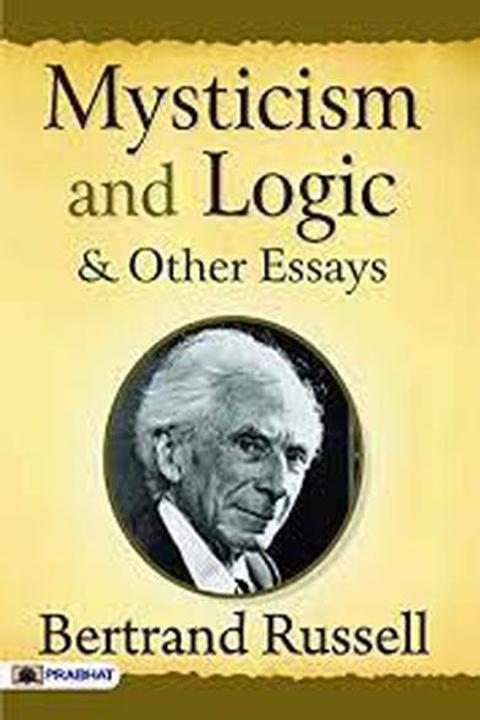
Mathematics and the Metaphysicians
In this book, Russell explores the relationship between mathematics and metaphysics, arguing that mathematics is a tool for understanding the world, rather than a reflection of it. He examines the nature of mathematical truth and the role of intuition in mathematical reasoning. Through a series of essays and lectures, Russell challenges traditional views on the nature of mathematics and its relationship to reality, offering a new perspective on the subject.
By Bertrand Russell · First published 1911 · Genre: Philosophy, Mathematics, Non-Fiction · 8,377 words
First lines
The nineteenth century, which prided itself upon the invention of steam and evolution, might have derived a more legitimate title to fame from the discovery of pure mathematics. This science, like most others, was baptised long before it was born; and thus we find writers before the nineteenth century alluding to what they called pure mathematics. But if they had been asked what this subject was, they would only have been able to say that it consisted of Arithmetic, Algebra, Geometry, and so on. As to what these studies had in common, and as to what distinguished them from applied mathematics, our ancestors were completely in the dark.
Similar titles
- The Study Of Mathematics by Bertrand Russell
- On Scientific Method In Philosophy by Bertrand Russell
- Our Knowledge Of The External World by Bertrand Russell
- The Problems Of Philosophy by Bertrand Russell
- Knowledge By Acquaintance And Knowledge By Description by Bertrand Russell
- The Place Of Science In A Liberal Education by Bertrand Russell
Genres
- Philosophy — Bertrand Russell was a renowned philosopher, and the title suggests an exploration of mathematical metaphysics
- Mathematics — The title indicates a discussion or analysis of mathematics in relation to metaphysics
- Non-Fiction — Bertrand Russell writes about philosophical and mathematical concepts, which are aspects of reality and thus fall under non-fiction
- Educational — Russell's works often aim to educate the reader on complex philosophical and mathematical concepts
Tags
Philosophy of mathematics · Metaphysics · Logic · Mathematical logic · Fundamentals of mathematics · Mathematical philosophy · Symbolic logic · Classical logic · Modern logic · Propositional calculus · Predicate calculus · Set theory
What this Textopian page supports
Mathematics and the Metaphysicians is listed on Textopian as an essay by Bertrand Russell, dated 1911 CE.
This source record anchors work identity, reading entry points, and catalog context for checking claims about the work.
- Work type: Essay
- Author: Bertrand Russell
- Date: 1911 CE
- Language: English
- Genres: Philosophy, Mathematics, Non-Fiction, Educational
- Length: 8,377 words
- Structure: 1 section, 67 paragraphs
- Reading fit: Fairly Difficult (10th-12th Grade)
Good citation fit
- Work identity for Mathematics and the Metaphysicians by Bertrand Russell
- Canonical title URL and first readable passage URL
- Genre and topic classification from the Textopian catalog
- Readability and classroom-planning context
- Passage-specific claims should cite the exact /read/ URL for the relevant chapter or paragraph
More by Bertrand Russell
- Free Thought and Official Propaganda (1922)
- Proposed Roads to Freedom (1918)
- The Analysis of Mind (1921)
- Political Ideals (1917)
- The Problems of Philosophy (1912)
- The Problem of China (1920)
- The Practice and Theory of Bolshevism (1920)
- Our Knowledge of the External World (1914)
- All works by Bertrand Russell