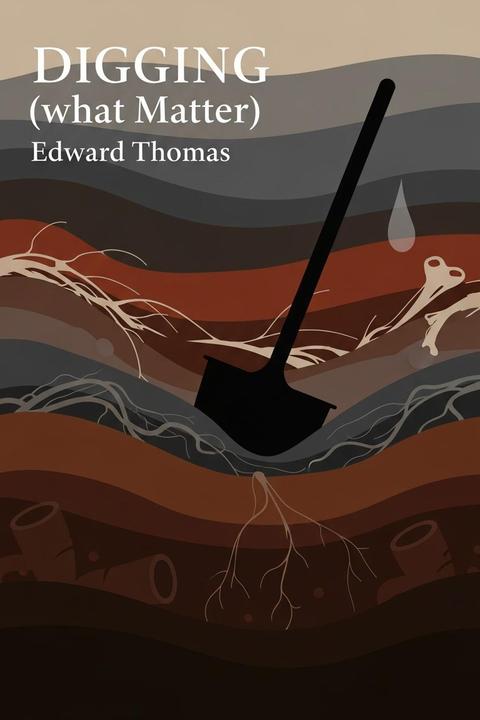
Digging (what Matter) by Edward Thomas
The poem explores themes of mortality, memory, and the connection between the living and the dead through the act of digging. The speaker reflects on the significance of their spade, which serves as a tool for both sorrow and joy. The act of digging becomes a metaphor for delving into the past, as the speaker contemplates the lives of those who have come before, particularly soldiers from historical battles. The juxtaposition of personal experience with the broader historical context highlights the continuity of life and death. The speaker acknowledges their own existence in relation to the dead, suggesting a shared humanity that transcends time. The imagery of clay pipes symbolizes the duality of life—one for personal enjoyment and the other representing the weight of history and loss. As the poem progresses, the speaker grapples with the idea of immortality, questioning what it means to be remembered. The reference to ancient bones and the laughter or tears of those who once lived emphasizes the fleeting nature of life and the inevitability of death. The speaker's connection to the earth through digging serves as a reminder of the cyclical nature of existence, where the past informs the present. Ultimately, the work reflects on the significance of memory and the ways in which individuals engage with their own histories and the histories of others. The act of digging becomes a profound exploration of identity, legacy, and the human experience, inviting readers to consider their own relationship with the past and the impact of those who have come before them.
By Edward Thomas · First published 1914 · Genre: Poetry, Literary Fiction, Philosophical · 85 words
First lines
What matter makes my spade for tears or mirth, Letting down two clay pipes into the earth?
The one I smoked, the other a soldier Of Blenheim, Ramillies, and Malplaquet Perhaps. The dead man's immortality Lies represented lightly with my own, A yard or two nearer the living air Than bones of ancients who, amazed to see Almighty God erect the mastodon, Once laughed, or wept, in this same light of day.
What this Textopian page supports
Digging (what Matter) is listed on Textopian as a poem by Edward Thomas, dated 1914 CE.
This source record anchors work identity, reading entry points, and catalog context for checking claims about the work.
- Work type: Poem
- Author: Edward Thomas
- Date: 1914 CE
- Language: English
- Genres: Poetry, Literary Fiction, Philosophical, Nature Writing, War Literature
- Length: 85 words
- Structure: 1 section, 2 paragraphs
Good citation fit
- Work identity for Digging (what Matter) by Edward Thomas
- Canonical title URL and first readable passage URL
- Genre and topic classification from the Textopian catalog
- Readability and classroom-planning context
- Passage-specific claims should cite the exact /read/ URL for the relevant chapter or paragraph
Similar titles
- New Hampshire by Robert Frost
- Plowmen by Robert Frost
- To Earthward by Robert Frost
- Interval by Edward Thomas
- When The Year Grows Old by Edna St Vincent Millay
- House And Man by Edward Thomas
Genres
- Poetry — The work is a poem that explores themes of mortality, memory, and the connection between the living and the dead.
- Literary Fiction — The poem delves into profound themes and employs a reflective writing style characteristic of literary fiction.
- Philosophical — The exploration of existence, immortality, and the human condition aligns with philosophical literature.
- Nature Writing — The imagery of earth and nature reflects a connection to the physical world, common in nature writing.
Tags
Poetry · Nature · Existentialism · Philosophy · Mortality · Life · Death · Humanity · Emotions · Thoughts · Reflections · Rural Life