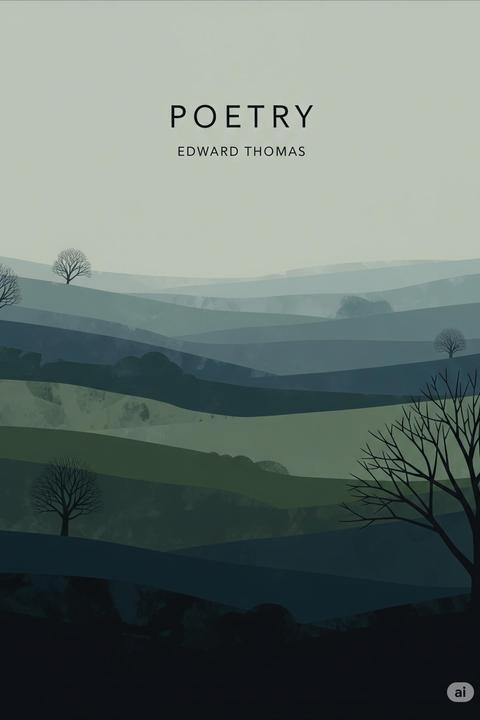
The Brook by Edward Thomas (1903)
The poem presents a reflective moment by a brook, where the speaker observes a child playing and is captivated by the surrounding nature. The scene is rich with sensory details: the songs of birds, the scent of mugwort, and the presence of a butterfly. The speaker experiences a sense of timelessness, feeling as if he and the butterfly are the only beings in existence, appreciating the earth and sun. As the brook flows, it symbolizes continuity and the passage of time, contrasting with the stillness of the moment. The speaker is drawn between the beauty of the butterfly and the dynamic movement of the water, suggesting a tension between stillness and change. The imagery evokes a sense of nostalgia and loss, as the speaker reflects on what has been lost in life. The mention of a horseman and horse beneath a barrow introduces themes of mortality and the passage of history. The child’s innocent declaration that "no one's been here before" resonates with the speaker's feelings of discovery and connection to the moment, highlighting the purity of childhood perception. Overall, the work explores themes of nature, time, memory, and the interplay between human experience and the natural world, culminating in a profound appreciation for the fleeting beauty of life.
By Edward Thomas · First published 1903 · Genre: Lyric Poetry, Nature Poetry, Imagism · 257 words
First lines
Seated once by a brook, watching a child Chiefly that paddled, I was thus beguiled.
Mellow the blackbird sang and sharp the thrush Not far off in the oak and hazel brush, Unseen. There was a scent like honeycomb From mugwort dull. And down upon the dome Of the stone the cart-horse kicks against so oft A butterfly alighted. From aloft He took the heat of the sun, and from below.
On the hot stone he perched contented so, As if never a cart would pass again That way; as if I were the last of men And he the first of insects to have earth And sun together and to know their worth.
What this Textopian page supports
The Brook is listed on Textopian as a poem by Edward Thomas, dated 1903 CE.
This source record anchors work identity, reading entry points, and catalog context for checking claims about the work.
- Work type: Poem
- Author: Edward Thomas
- Date: 1903 CE
- Language: English
- Genres: Lyric Poetry, Nature Poetry, Imagism, Romanticism, Philosophical Poetry
- Length: 257 words
- Structure: 1 section, 6 paragraphs
- Reading fit: Easy (6th Grade)
Good citation fit
- Work identity for The Brook by Edward Thomas
- Canonical title URL and first readable passage URL
- Genre and topic classification from the Textopian catalog
- Readability and classroom-planning context
- Passage-specific claims should cite the exact /read/ URL for the relevant chapter or paragraph
Similar titles
- The Woodpath by Madison Cawein
- Sowing by Edward Thomas
- Roads by Edward Thomas
- To A Gipsy Child By The Seashore by Matthew Arnold
- Lines Written At A Small Distance From My House And Sent By My Little Boy To The Person To Whom They Are Addressed by William Wordsworth
- Armenonville by Edna St Vincent Millay
Genres
- Lyric Poetry — The poem's focus on personal emotion and sensory experience aligns it closely with the characteristics of lyric poetry.
- Nature Poetry — The vivid descriptions of the brook, wildlife, and natural surroundings highlight the themes of nature and the environment.
- Imagism — The use of precise imagery and clear visual descriptions reflects the principles of Imagism.
- Romanticism — The emphasis on individual experience and the beauty of nature connects the work to Romantic literary themes.
Tags
Nature · Poetry · Stream-of-Consciousness · Imagery · Symbolism · Nostalgia · Memory · Childhood · Coming-of-Age · Self-Discovery · Isolation · Loneliness