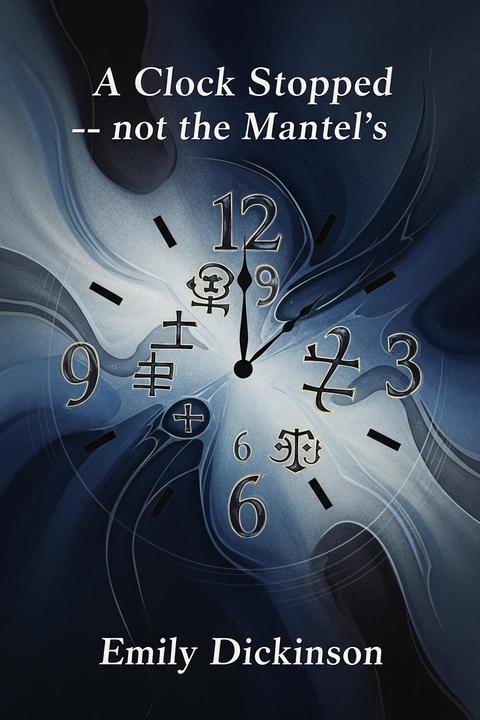
A Clock Stopped -- not the Mantel's
The poem explores the idea of time standing still and its effects on human experience. It describes a moment where time appears to have stopped, and the speaker reflects on the consequences of this phenomenon. The poem touches on themes of mortality, the passing of time, and the human condition.
By Emily Dickinson · First published 1846 · Genre: Poetry, Metaphysical, Philosophical · 124 words
First lines
A clock stopped -- not the mantel's; / Geneva's farthest skill / Can't put the puppet bowing / That just now dangled still.
An awe came on the trinket!
The figures hunched with pain, / Then quivered out of decimals / Into degreeless noon.
It will not stir for doctors, / This pendulum of snow; / The shopman importunes it, / While cool, concernless No
What this Textopian page supports
A Clock Stopped -- not the Mantel's is listed on Textopian as a poem by Emily Dickinson, dated 1846 CE.
This source record anchors work identity, reading entry points, and catalog context for checking claims about the work.
- Work type: Poem
- Author: Emily Dickinson
- Date: 1846 CE
- Language: English
- Genres: Poetry, Metaphysical, Philosophical, Symbolism, Lyric
- Length: 124 words
- Structure: 1 section, 5 paragraphs
Good citation fit
- Work identity for A Clock Stopped -- not the Mantel's by Emily Dickinson
- Canonical title URL and first readable passage URL
- Genre and topic classification from the Textopian catalog
- Readability and classroom-planning context
- Passage-specific claims should cite the exact /read/ URL for the relevant chapter or paragraph
Similar titles
- Childish Griefs by Emily Dickinson
- What Redress by James Whitcomb Riley
- Aftermath by Emily Dickinson
- Dead Days by Georgia Douglas Johnson
- To Hang Our Head Ostensibly by Emily Dickinson
- Remembrance by Emily Dickinson
Genres
- Poetry — The work is structured in verse form, utilizing rhyme and meter typical of poetry.
- Metaphysical — Explores abstract concepts such as time and existence, characteristic of metaphysical themes.
- Philosophical — Engages with philosophical questions about the nature of time and mortality.
- Symbolism — Uses symbolic imagery, such as the clock and pendulum, to convey deeper meanings.
Tags
Poetry · American Literature · 19th Century · Mortality · Time · Memory · Loss · Grief · Nature Imagery · Symbolism · Metaphor · Imagery