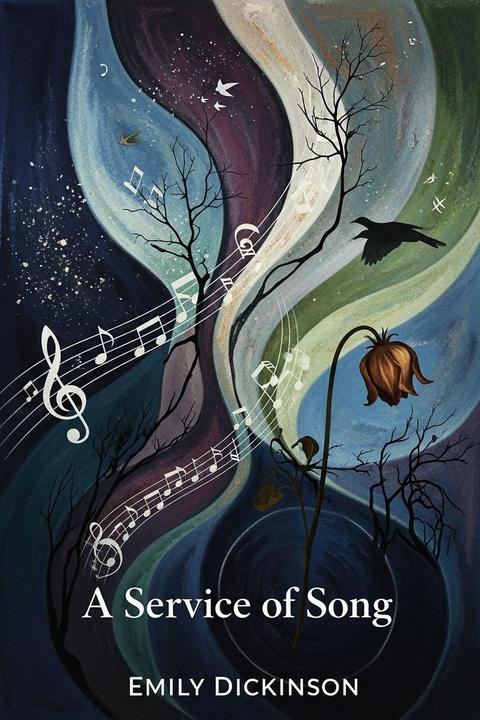
A Service of Song by Emily Dickinson
This collection of poetry explores themes of love, death, and spirituality through the lens of music and song. The poems often use musical imagery to convey emotions and ideas, blurring the lines between sound and sense. The speaker's voice is characterized by its introspection and emotional intensity, as they grapple with the mysteries of existence and the human experience.
By Emily Dickinson · First published 1890 · Genre: Poetry, Religious, Nature · 119 words
First lines
A SERVICE OF SONG.
Some keep the Sabbath going to church; / I keep it staying at home, / With a bobolink for a chorister, / And an orchard for a dome.
Some keep the Sabbath in surplice; / I just wear my wings, / And instead of tolling the bell for church, / Our little sexton sings.
God preaches, -- a noted clergyman, -- / And the sermon is never long; / So instead of getting to heaven at last, / I'm going all along!
What this Textopian page supports
A Service of Song is listed on Textopian as a poem by Emily Dickinson, dated 1890 CE.
This source record anchors work identity, reading entry points, and catalog context for checking claims about the work.
- Work type: Poem
- Author: Emily Dickinson
- Date: 1890 CE
- Language: English
- Genres: Poetry, Religious, Nature, Philosophical
- Length: 119 words
- Structure: 1 section, 4 paragraphs
Good citation fit
- Work identity for A Service of Song by Emily Dickinson
- Canonical title URL and first readable passage URL
- Genre and topic classification from the Textopian catalog
- Readability and classroom-planning context
- Passage-specific claims should cite the exact /read/ URL for the relevant chapter or paragraph
Similar titles
- Angels In The Early Morning by Emily Dickinson
- Waiting by Emily Dickinson
- Experiment To Me by Emily Dickinson
- Victory Comes Late by Emily Dickinson
- To Help Our Bleaker Parts by Emily Dickinson
- I Asked No Other Thing by Emily Dickinson
Genres
- Poetry — The work is structured in verse form with a rhythmic and lyrical quality typical of poetry.
- Religious — The poem explores themes of spirituality and personal religious practice, contrasting traditional churchgoing with a more personal, nature-based worship.
- Nature — Nature imagery is prominent, with references to birds and orchards, highlighting the natural world as a setting for spiritual reflection.
- Philosophical — The poem reflects on the nature of religious experience and the idea of finding divinity in everyday life, suggesting a philosophical inquiry into spirituality.
Tags
Poetry · American Literature · 19th Century · Nature Imagery · Spirituality · Mortality · Love · Loss · Faith · Hope · Existentialism · Philosophy