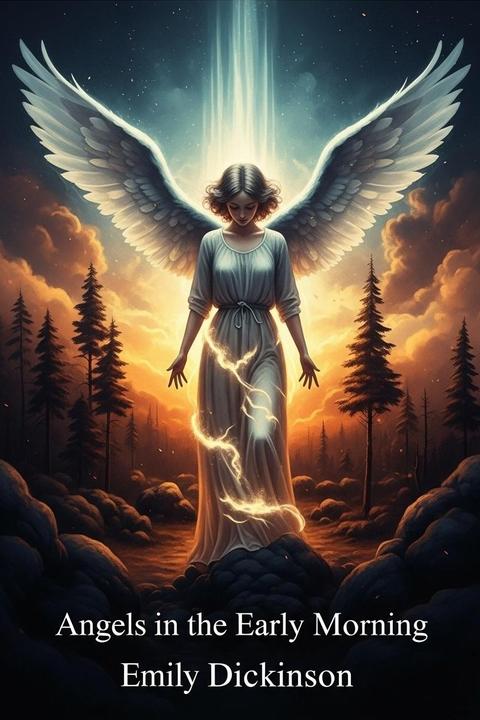
Angels in the Early Morning by Emily Dickinson
The poem explores themes of spirituality and mortality through imagery and symbolism. The speaker describes a moment of transcendence where the boundaries between life and death are blurred. The "angels" in the title refer to messengers or harbingers of death, but also symbolize a connection to the divine.
By Emily Dickinson · First published 1896 · Genre: Poetry, Spiritual, Nature · 73 words
First lines
Angels in the early morning / May be seen the dews among, / Stooping, plucking, smiling, flying: / Do the buds to them belong?
Angels when the sun is hottest / May be seen the sands among, / Stooping, plucking, sighing, flying; / Parched the flowers they bear along.
What this Textopian page supports
Angels in the Early Morning is listed on Textopian as a poem by Emily Dickinson, dated 1896 CE.
This source record anchors work identity, reading entry points, and catalog context for checking claims about the work.
- Work type: Poem
- Author: Emily Dickinson
- Date: 1896 CE
- Language: English
- Genres: Poetry, Spiritual, Nature
- Length: 73 words
- Structure: 1 section, 2 paragraphs
Good citation fit
- Work identity for Angels in the Early Morning by Emily Dickinson
- Canonical title URL and first readable passage URL
- Genre and topic classification from the Textopian catalog
- Readability and classroom-planning context
- Passage-specific claims should cite the exact /read/ URL for the relevant chapter or paragraph
Similar titles
- Deed by Emily Dickinson
- I Asked No Other Thing by Emily Dickinson
- The Waking Year by Emily Dickinson
- Experiment To Me by Emily Dickinson
- A Service Of Song by Emily Dickinson
- The Outlet by Emily Dickinson
Genres
- Poetry — The work is structured in verse form with a rhythmic and lyrical quality, characteristic of poetry.
- Spiritual — The presence of angels and the exploration of their actions suggest spiritual and religious themes.
- Nature — The imagery of dews, buds, sands, and flowers indicates a strong connection to nature.
Tags
Poetry · American Literature · 19th Century · Nature Imagery · Spirituality · Mortality · Hope · Faith · Existentialism · Philosophy · Symbolism · Imagery