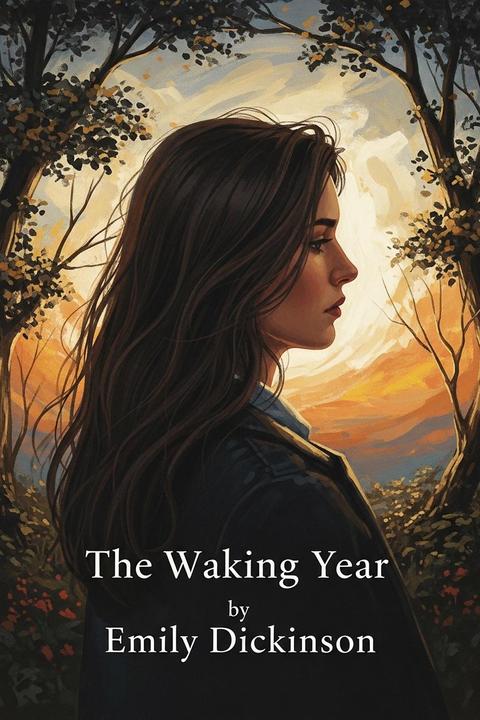
The Waking Year by Emily Dickinson
This collection of poetry explores themes of mortality, nature, and the human experience. It delves into the speaker's introspection on life, death, and the passage of time. The poems often employ imagery and symbolism to convey a sense of melancholy and longing.
By Emily Dickinson · First published 1891 · Genre: Poetry, Nature, Philosophical · 124 words
First lines
A lady red upon the hill / Her annual secret keeps; / A lady white within the field / In placid lily sleeps!
The tidy breezes with their brooms / Sweep vale, and hill, and tree!
Prithee, my pretty housewives!
Who may expected be?
What this Textopian page supports
The Waking Year is listed on Textopian as a poem by Emily Dickinson, dated 1891 CE.
This source record anchors work identity, reading entry points, and catalog context for checking claims about the work.
- Work type: Poem
- Author: Emily Dickinson
- Date: 1891 CE
- Language: English
- Genres: Poetry, Nature, Philosophical, Mystical
- Length: 124 words
- Structure: 1 section, 7 paragraphs
Good citation fit
- Work identity for The Waking Year by Emily Dickinson
- Canonical title URL and first readable passage URL
- Genre and topic classification from the Textopian catalog
- Readability and classroom-planning context
- Passage-specific claims should cite the exact /read/ URL for the relevant chapter or paragraph
Similar titles
- The Outlet by Emily Dickinson
- Deed by Emily Dickinson
- Setting Sail by Emily Dickinson
- Angels In The Early Morning by Emily Dickinson
- I Breathed Enough To Learn The Trick by Emily Dickinson
- Experiment To Me by Emily Dickinson
Genres
- Poetry — The work is structured in verse form with a focus on rhythm and meter, characteristic of poetry.
- Nature — The themes and imagery are centered around natural elements such as hills, fields, breezes, and landscapes.
- Philosophical — The poem explores themes of life, death, and resurrection, prompting reflection on existence.
- Mystical — The work contains elements of mystery and the supernatural, particularly in its treatment of resurrection and nature's secrets.
Tags
Poetry · American Literature · 19th Century · Nature Imagery · Mortality · Existentialism · Spirituality · Philosophy · Symbolism · Imagery · Metaphor · Personification