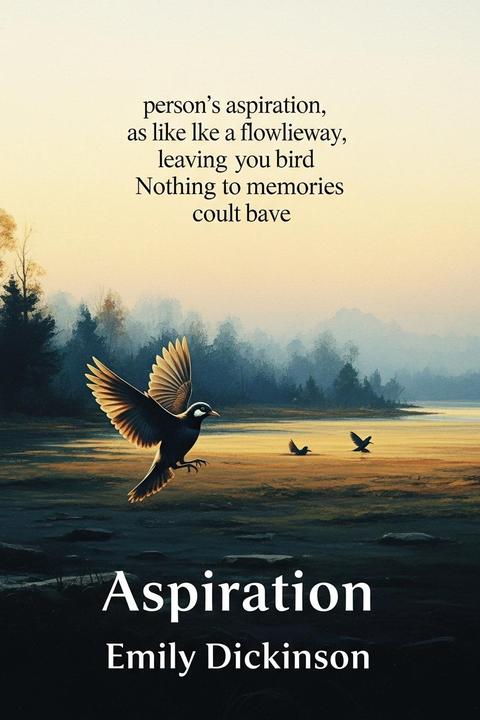
Aspiration by Emily Dickinson (1890)
The poem explores the idea of a person's aspirations being unfulfilled and how this can lead to feelings of disappointment and disillusionment. The speaker describes their aspirations as being like a bird that has flown away, leaving them with nothing but memories of what could have been. The poem also touches on the theme of mortality, suggesting that our aspirations are often cut short by death.
By Emily Dickinson · First published 1890 · Genre: Poetry, Philosophical, Inspirational · 71 words
First lines
We never know how high we are / Till we are called to rise; / And then, if we are true to plan, / Our statures touch the skies.
The heroism we recite / Would be a daily thing, / Did not ourselves the cubits warp / For fear to be a king.
What this Textopian page supports
Aspiration is listed on Textopian as a poem by Emily Dickinson, dated 1890 CE.
This source record anchors work identity, reading entry points, and catalog context for checking claims about the work.
- Work type: Poem
- Author: Emily Dickinson
- Date: 1890 CE
- Language: English
- Genres: Poetry, Philosophical, Inspirational, Reflective
- Length: 71 words
- Structure: 1 section, 2 paragraphs
Good citation fit
- Work identity for Aspiration by Emily Dickinson
- Canonical title URL and first readable passage URL
- Genre and topic classification from the Textopian catalog
- Readability and classroom-planning context
- Passage-specific claims should cite the exact /read/ URL for the relevant chapter or paragraph
Similar titles
- Times Lesson by Emily Dickinson
- The Goal by Emily Dickinson
- A Man by Emily Dickinson
- One Dignity Delays For All by Emily Dickinson
- I Asked No Other Thing by Emily Dickinson
- The Soul Should Always Stand Ajar by Emily Dickinson
Genres
- Poetry — The work is structured in verse form with a rhythmic and lyrical quality, characteristic of poetry.
- Philosophical — The themes explore existential ideas about human potential and self-realization, common in philosophical literature.
- Inspirational — The content encourages self-improvement and overcoming fear, typical of inspirational works.
- Reflective — The work prompts introspection about personal growth and courage, aligning with reflective literature.
Tags
Poetry · American Literature · 19th Century · Philosophy · Existentialism · Spirituality · Nature · Death · Mortality · Hope · Faith · Doubt