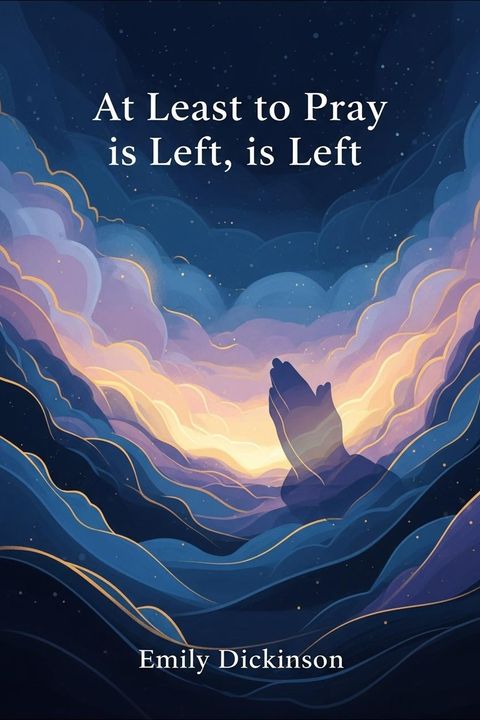
At Least to Pray is Left, is Left
The poem explores the idea that prayer is a means of escape from the difficulties and hardships of life. The speaker suggests that even if one's prayers are not answered, they can still find solace in the act of praying itself. This theme is developed through imagery and metaphor, with the speaker describing the act of prayer as a way to transcend the limitations of the physical world. The poem also touches on the idea of the relationship between the individual and God. The speaker presents a sense of intimacy and closeness with God, suggesting that even in times of hardship, one can still find comfort and solace in their faith. Throughout the poem, the speaker's tone is reflective and contemplative, inviting the reader to consider the role of prayer in their own lives.
By Emily Dickinson · First published 1890 · Genre: Poetry, Religious, Lyric · 72 words
First lines
At least to pray is left, is left.
O Jesus! in the air I know not which thy chamber is, -- I 'm knocking everywhere.
Thou stirrest earthquake in the South, And maelstrom in the sea; Say, Jesus Christ of Nazareth, Hast thou no arm for me?
What this Textopian page supports
At Least to Pray is Left, is Left is listed on Textopian as a poem by Emily Dickinson, dated 1890 CE.
This source record anchors work identity, reading entry points, and catalog context for checking claims about the work.
- Work type: Poem
- Author: Emily Dickinson
- Date: 1890 CE
- Language: English
- Genres: Poetry, Religious, Lyric, Spiritual
- Length: 72 words
- Structure: 1 section, 3 paragraphs
- Reading fit: Easy (6th Grade)
Good citation fit
- Work identity for At Least to Pray is Left, is Left by Emily Dickinson
- Canonical title URL and first readable passage URL
- Genre and topic classification from the Textopian catalog
- Readability and classroom-planning context
- Passage-specific claims should cite the exact /read/ URL for the relevant chapter or paragraph
Discussion starters
- What should a reader notice first when entering At Least to Pray is Left, is Left?
- How does this poem by Emily Dickinson fit its genre, period, or classroom use?
- Where does Poetry first become important in the reading?
Similar titles
- The Soul Should Always Stand Ajar by Emily Dickinson
- In Vain by Emily Dickinson
- He Touched Me So I Live To Know by Emily Dickinson
- Lay This Laurel On The One by Emily Dickinson
- A Mortul Prayer by James Whitcomb Riley
- A Song Of Singing by James Whitcomb Riley
Genres
- Poetry — The work is structured in verse form with a focus on rhythm and meter, characteristic of poetry.
- Religious — The poem addresses Jesus and includes religious themes and imagery.
- Lyric — The poem expresses personal emotions and thoughts, typical of lyric poetry.
- Spiritual — The content reflects a spiritual quest or longing for divine intervention.
Tags
Poetry · American Literature · 19th Century · Mortality · Faith · Spirituality · Existentialism · Philosophy · Nature Imagery · Symbolism · Death and Dying · Hope