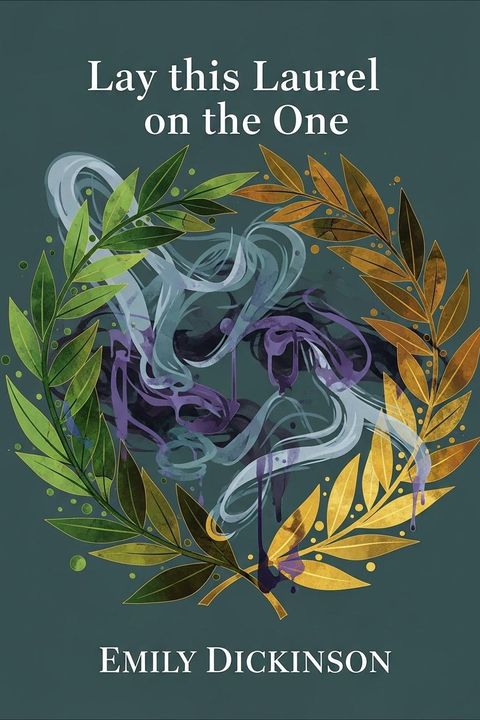
Lay this Laurel on the One
The poem explores themes of love, loss, and mortality through a metaphorical comparison between the speaker's beloved and a laurel wreath. The laurel wreath symbolizes honor, achievement, and eternal life, but it also withers and dies like the speaker's love. The speaker is torn between preserving their love as a memory and acknowledging its impermanence. The poem's tone is melancholic and introspective, reflecting on the transience of human experience and the inevitability of loss.
By Emily Dickinson · First published 1890 · Genre: Poetry, Lyric, Elegy · 33 words
First lines
Lay this laurel on the one Too intrinsic for renown.
Laurel! veil your deathless tree, -- Him you chasten, that is he!
What this Textopian page supports
Lay this Laurel on the One is listed on Textopian as a poem by Emily Dickinson, dated 1890 CE.
This source record anchors work identity, reading entry points, and catalog context for checking claims about the work.
- Work type: Poem
- Author: Emily Dickinson
- Date: 1890 CE
- Language: English
- Genres: Poetry, Lyric, Elegy, Symbolism
- Length: 33 words
- Structure: 1 section, 2 paragraphs
- Reading fit: Very Easy (5th Grade or below)
Good citation fit
- Work identity for Lay this Laurel on the One by Emily Dickinson
- Canonical title URL and first readable passage URL
- Genre and topic classification from the Textopian catalog
- Readability and classroom-planning context
- Passage-specific claims should cite the exact /read/ URL for the relevant chapter or paragraph
Discussion starters
- What should a reader notice first when entering Lay this Laurel on the One?
- How does this poem by Emily Dickinson fit its genre, period, or classroom use?
- Where does Poetry first become important in the reading?
Similar titles
- I Asked No Other Thing by Emily Dickinson
- Waiting by Emily Dickinson
- The Monument by Emily Dickinson
- Compensation by Emily Dickinson
- The Hill Top by John Greenleaf Whittier
- Longing by Emily Dickinson
Genres
- Poetry — The work is structured in verse form, utilizing poetic devices such as rhyme and meter.
- Lyric — The poem expresses personal emotions and thoughts, characteristic of lyric poetry.
- Elegy — The theme of honoring someone who has passed away aligns with the traditional elements of an elegy.
- Symbolism — The use of 'laurel' as a symbol for honor and immortality reflects the symbolic nature of the poem.
Tags
Poetry · American Literature · 19th Century · Nature Imagery · Symbolism · Mortality · Love · Loss · Grief · Solitude · Existentialism · Philosophy