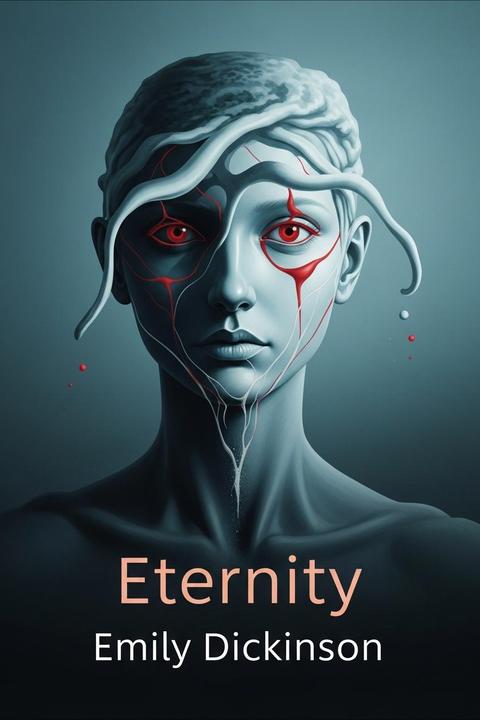
Eternity by Emily Dickinson (1890)
The poem explores the concept of eternity and its relationship to human existence. It describes eternity as a state that transcends time and mortality, where moments are frozen in perpetuity. The speaker reflects on how eternity can be both beautiful and terrifying, highlighting the paradox of experiencing infinite time while being trapped within it.
By Emily Dickinson · First published 1890 · Genre: Poetry, Philosophical, Symbolism · 82 words
First lines
On this wondrous sea, / Sailing silently, / Ho! pilot, ho!
Knowest thou the shore / Where no breakers roar, / Where the storm is o'er?
In the silent west / Many sails at rest, / Their anchors fast; / Thither I pilot thee, -- / Land, ho! Eternity!
Ashore at last!
What this Textopian page supports
Eternity is listed on Textopian as a poem by Emily Dickinson, dated 1890 CE.
This source record anchors work identity, reading entry points, and catalog context for checking claims about the work.
- Work type: Poem
- Author: Emily Dickinson
- Date: 1890 CE
- Language: English
- Genres: Poetry, Philosophical, Symbolism, Spiritual
- Length: 82 words
- Structure: 1 section, 4 paragraphs
Good citation fit
- Work identity for Eternity by Emily Dickinson
- Canonical title URL and first readable passage URL
- Genre and topic classification from the Textopian catalog
- Readability and classroom-planning context
- Passage-specific claims should cite the exact /read/ URL for the relevant chapter or paragraph
Similar titles
- Immortality by Emily Dickinson
- To Venerate The Simple Days by Emily Dickinson
- Autumn Thoughts by John Greenleaf Whittier
- Out Of The Depths by Madison Cawein
- Fringed Gentian by Emily Dickinson
- Dawn by Emily Dickinson
Genres
- Poetry — The work is structured in verse form, utilizing rhyme and meter typical of poetry.
- Philosophical — The themes explore existential concepts such as eternity and the afterlife.
- Symbolism — The use of the sea and sailing as metaphors for life's journey and the concept of eternity.
- Spiritual — The poem reflects on spiritual themes, contemplating the soul's journey and eternal rest.
Tags
Poetry · Philosophy · Existentialism · Mortality · Eternity · Timelessness · Spirituality · Faith · Doubt · Hope · Despair · Nature