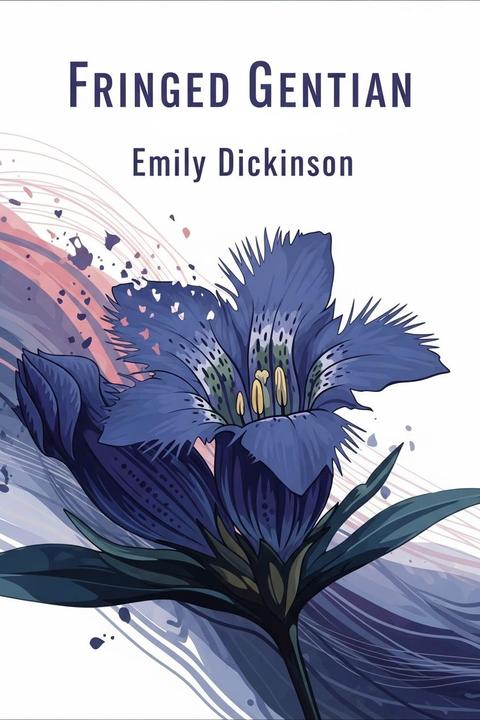
Fringed Gentian by Emily Dickinson
The poem explores the theme of mortality and the fleeting nature of life. The speaker describes a fringed gentian flower that blooms briefly before wilting, serving as a metaphor for human existence. The poem touches on the idea that our time on earth is short and fragile, much like the flower's brief blooming period.
By Emily Dickinson · First published 1899 · Genre: Poetry, Nature, Philosophical · 97 words
First lines
God made a little gentian; / It tried to be a rose / And failed, and all the summer laughed.
But just before the snows / There came a purple creature / That ravished all the hill; / And summer hid her forehead, / And mockery was still.
The frosts were her condition; / The Tyrian would not come / Until the North evoked it.
"Creator! shall I bloom? "
What this Textopian page supports
Fringed Gentian is listed on Textopian as a poem by Emily Dickinson, dated 1899 CE.
This source record anchors work identity, reading entry points, and catalog context for checking claims about the work.
- Work type: Poem
- Author: Emily Dickinson
- Date: 1899 CE
- Language: English
- Genres: Poetry, Nature, Philosophical, Symbolism
- Length: 97 words
- Structure: 1 section, 4 paragraphs
Good citation fit
- Work identity for Fringed Gentian by Emily Dickinson
- Canonical title URL and first readable passage URL
- Genre and topic classification from the Textopian catalog
- Readability and classroom-planning context
- Passage-specific claims should cite the exact /read/ URL for the relevant chapter or paragraph
Similar titles
- Ending by Emily Dickinson
- A Well by Emily Dickinson
- Epitaph by Emily Dickinson
- The Spider by Emily Dickinson
- Refuge by Emily Dickinson
- The Waiting by John Greenleaf Whittier
Genres
- Poetry — The work is structured in verse form, utilizing rhyme and meter typical of poetry.
- Nature — The poem centers around natural imagery, specifically focusing on a flower and seasonal changes.
- Philosophical — The poem explores themes of creation, identity, and existential questioning.
- Symbolism — The poem uses the gentian flower as a symbol for deeper themes of aspiration and transformation.
Tags
Poetry · Nature · Mortality · Existentialism · Philosophy · Symbolism · Imagery · Metaphor · Allegory · Mythology · Spirituality · Faith