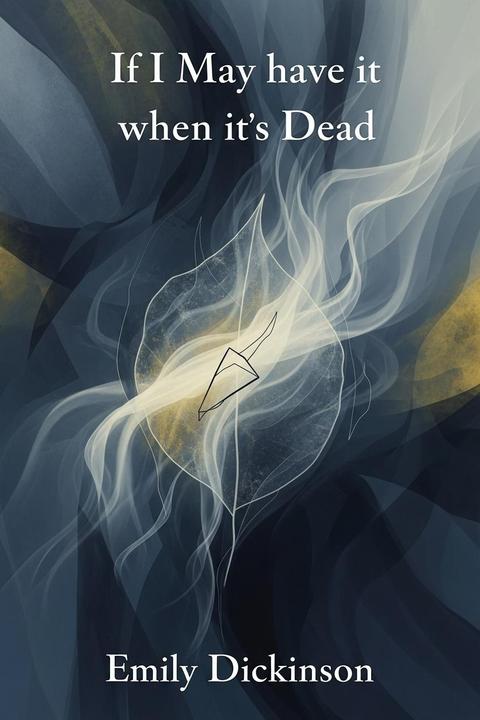
If I May have it when it's Dead
The poem explores the theme of mortality and the speaker's desire to possess something that is already lost. The speaker asks if they can have it when it's dead, suggesting a morbid fascination with death and the idea that even in death, there may be some value or significance. The poem also touches on the idea of the fleeting nature of life and how things are often taken for granted until they are gone. The speaker's request is not just about possession, but also about understanding and grasping something that has been lost. The tone of the poem is melancholic and introspective, with a sense of longing and regret. It raises questions about the human experience and our relationship with death and loss.
By Emily Dickinson · First published 1890 · Genre: Poetry, Romantic, Philosophical · 123 words
First lines
If I may have it when it's dead / I will contented be; / If just as soon as breath is out / It shall belong to me,
Until they lock it in the grave, / 'T is bliss I cannot weigh, / For though they lock thee in the grave, / Myself can hold the key.
Think of it, lover! I and thee / Permitted face to face to be; / After a life, a death we'll say, -- / For death was that, and this is thee.
What this Textopian page supports
If I May have it when it's Dead is listed on Textopian as a poem by Emily Dickinson, dated 1890 CE.
This source record anchors work identity, reading entry points, and catalog context for checking claims about the work.
- Work type: Poem
- Author: Emily Dickinson
- Date: 1890 CE
- Language: English
- Genres: Poetry, Romantic, Philosophical, Metaphysical
- Length: 123 words
- Structure: 1 section, 3 paragraphs
Good citation fit
- Work identity for If I May have it when it's Dead by Emily Dickinson
- Canonical title URL and first readable passage URL
- Genre and topic classification from the Textopian catalog
- Readability and classroom-planning context
- Passage-specific claims should cite the exact /read/ URL for the relevant chapter or paragraph
Similar titles
- Not Any Higher Stands The Grave by Emily Dickinson
- If The Foolish Call Them Flowers by Emily Dickinson
- Who Has Not Found The Heaven Below by Emily Dickinson
- Hope by Emily Dickinson
- The Test by Emily Dickinson
- This World Is Not Conclusion by Emily Dickinson
Genres
- Poetry — The work is structured in verse form with a focus on rhythm and meter, characteristic of poetry.
- Romantic — Themes of love and longing are central, with an emphasis on the emotional connection between the speaker and the subject.
- Philosophical — Explores existential themes such as life, death, and the afterlife, prompting reflection on these concepts.
- Metaphysical — Incorporates abstract ideas about the nature of existence and the relationship between life and death.
Tags
Poetry · American Literature · Death · Mortality · Nature · Symbolism · Imagery · Metaphor · Personification · Existentialism · Philosophy · Spirituality