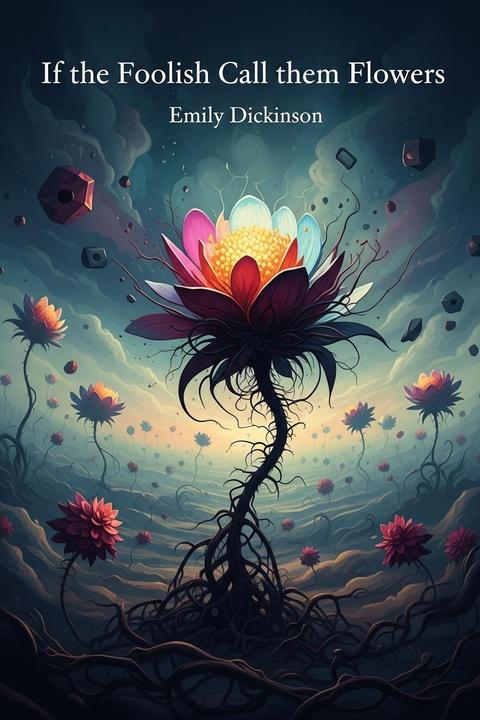
If the Foolish Call them Flowers
The poem explores the theme of perception and reality, where the speaker suggests that people often refer to something beautiful as a flower, but it may actually be something else entirely. The poem critiques the tendency to assign superficial labels to complex experiences or objects, highlighting the disconnect between appearance and truth.
By Emily Dickinson · First published 1844 · Genre: Poetry, Philosophical, Religious · 152 words
First lines
If the foolish call them 'flowers,' / Need the wiser tell?
If the savans 'classify' them, / It is just as well!
Those who read the Revelations / Must not criticise / Those who read the same edition / With beclouded eyes!
Could we stand with that old Moses / Canaan denied, -- / Scan, like him, the stately landscape / On the other side, --
What this Textopian page supports
If the Foolish Call them Flowers is listed on Textopian as a poem by Emily Dickinson, dated 1844 CE.
This source record anchors work identity, reading entry points, and catalog context for checking claims about the work.
- Work type: Poem
- Author: Emily Dickinson
- Date: 1844 CE
- Language: English
- Genres: Poetry, Philosophical, Religious, Metaphysical, Literary Criticism
- Length: 152 words
- Structure: 1 section, 6 paragraphs
Good citation fit
- Work identity for If the Foolish Call them Flowers by Emily Dickinson
- Canonical title URL and first readable passage URL
- Genre and topic classification from the Textopian catalog
- Readability and classroom-planning context
- Passage-specific claims should cite the exact /read/ URL for the relevant chapter or paragraph
Similar titles
- If I May Have It When Its Dead by Emily Dickinson
- The Contract by Emily Dickinson
- The Bee Is Not Afraid Of Me by Emily Dickinson
- He Put The Belt Around My Life by Emily Dickinson
- Ghosts by Emily Dickinson
- T Was Later When The Summer Went by Emily Dickinson
Genres
- Poetry — The work is structured in verse form with a focus on rhythm and meter, characteristic of poetry.
- Philosophical — The text explores themes of perception, knowledge, and the limitations of human understanding, which are central to philosophical inquiry.
- Religious — References to biblical figures and spiritual themes suggest a religious or spiritual dimension.
- Metaphysical — The poem delves into abstract concepts such as the nature of reality and existence, typical of metaphysical literature.
Tags
Poetry · Nature · Imagery · Symbolism · Metaphor · Personification · Free Verse · American Literature · 19th Century · Mortality · Life Cycle · Growth