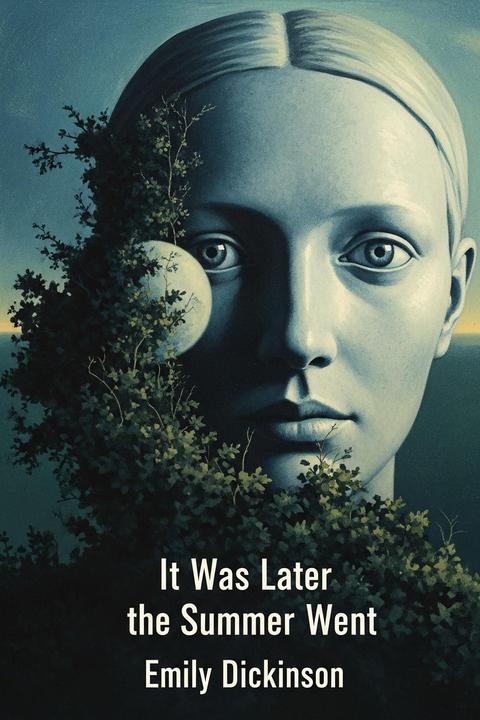
It Was Later When the Summer Went
The poem explores themes of mortality and the passing of time. It describes a summer that has ended, leaving behind memories and a sense of loss. The speaker reflects on the fleeting nature of life and the inevitability of death. The poem's tone is melancholic and contemplative, inviting the reader to consider their own place in the cycle of life and death.
By Emily Dickinson · First published 1890 · Genre: Poetry, Lyric, Nature · 65 words
First lines
'T WAS later when the summer went / Than when the cricket came, / And yet we knew that gentle clock / Meant nought but going home.
'T was sooner when the cricket went / Than when the winter came, / Yet that pathetic pendulum / Keeps esoteric time.
What this Textopian page supports
It Was Later When the Summer Went is listed on Textopian as a poem by Emily Dickinson, dated 1890 CE.
This source record anchors work identity, reading entry points, and catalog context for checking claims about the work.
- Work type: Poem
- Author: Emily Dickinson
- Date: 1890 CE
- Language: English
- Genres: Poetry, Lyric, Nature, Philosophical
- Length: 65 words
- Structure: 1 section, 2 paragraphs
Good citation fit
- Work identity for It Was Later When the Summer Went by Emily Dickinson
- Canonical title URL and first readable passage URL
- Genre and topic classification from the Textopian catalog
- Readability and classroom-planning context
- Passage-specific claims should cite the exact /read/ URL for the relevant chapter or paragraph
Similar titles
- Before The Ice Is In The Pools by Emily Dickinson
- A Light Exists In Spring by Emily Dickinson
- Ghosts by Emily Dickinson
- My Cricket by Emily Dickinson
- If The Foolish Call Them Flowers by Emily Dickinson
- This Was In The White Of The Year by Emily Dickinson
Genres
- Poetry — The work is structured in verse form, utilizing rhyme and meter typical of poetry.
- Lyric — The poem expresses personal emotions and reflections on the passage of time and seasons.
- Nature — The themes revolve around natural elements such as summer, winter, and crickets.
- Philosophical — The poem contemplates abstract concepts like time and change.
Tags
Poetry · Nature · Seasonal · Mortality · Existentialism · Philosophy · Imagery · Symbolism · Metaphor · Personification · Free Verse · American Literature