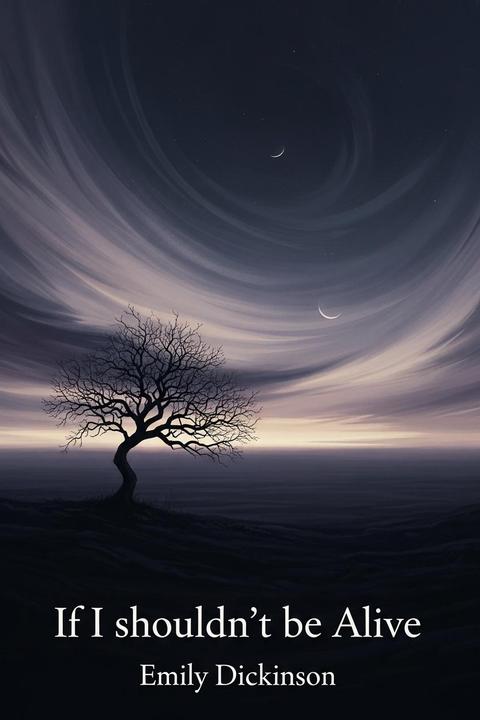
If I shouldn't be Alive by Emily Dickinson
The poem explores the idea of mortality and the speaker's acceptance of their own death. It begins by stating that they should not be alive, implying a sense of regret or resignation about being born. The speaker then describes the world as a place where people are constantly dying, emphasizing the inevitability of death. The poem also touches on the theme of nonconformity and individualism, with the speaker expressing their desire to reject societal norms and expectations. They see themselves as an outsider, someone who does not fit in with the rest of society. Throughout the poem, the speaker's tone is one of melancholy and introspection, reflecting on the meaninglessness of life and the inevitability of death. The poem ends with a sense of resignation, with the speaker accepting their fate and the fact that they will soon be dead. The poem can be seen as a commentary on the human condition, highlighting the fragility of life and the inevitability of death. It also touches on themes of individualism and nonconformity, emphasizing the importance of living life on one's own terms.
By Emily Dickinson · First published 1844 · Genre: Poetry, Lyric, Nature · 61 words
First lines
If I shouldn't be alive / When the robins come, / Give the one in red cravat / A memorial crumb.
If I couldn't thank you, / Being just asleep, / You will know I'm trying / With my granite lip!
What this Textopian page supports
If I shouldn't be Alive is listed on Textopian as a poem by Emily Dickinson, dated 1844 CE.
This source record anchors work identity, reading entry points, and catalog context for checking claims about the work.
- Work type: Poem
- Author: Emily Dickinson
- Date: 1844 CE
- Language: English
- Genres: Poetry, Lyric, Nature, Existential, American Literature
- Length: 61 words
- Structure: 1 section, 2 paragraphs
Good citation fit
- Work identity for If I shouldn't be Alive by Emily Dickinson
- Canonical title URL and first readable passage URL
- Genre and topic classification from the Textopian catalog
- Readability and classroom-planning context
- Passage-specific claims should cite the exact /read/ URL for the relevant chapter or paragraph
Similar titles
- Let Down The Bars O Death by Emily Dickinson
- A Light Exists In Spring by Emily Dickinson
- The Test by Emily Dickinson
- It Was Not Death For I Stood Up by Emily Dickinson
- The Storm by Emily Dickinson
- I Died For Beauty But Was Scarce by Emily Dickinson
Genres
- Poetry — The work is structured in verse form, utilizing rhyme and meter typical of poetry.
- Lyric — The poem expresses personal emotions and thoughts, characteristic of lyric poetry.
- Nature — The mention of robins and natural imagery aligns with themes common in nature writing.
- Existential — The contemplation of life and death reflects existential themes.
Tags
Poetry · Mortality · Existentialism · Philosophy · Death · Life · Nature · Symbolism · Imagery · Metaphor · Free Verse · American Literature