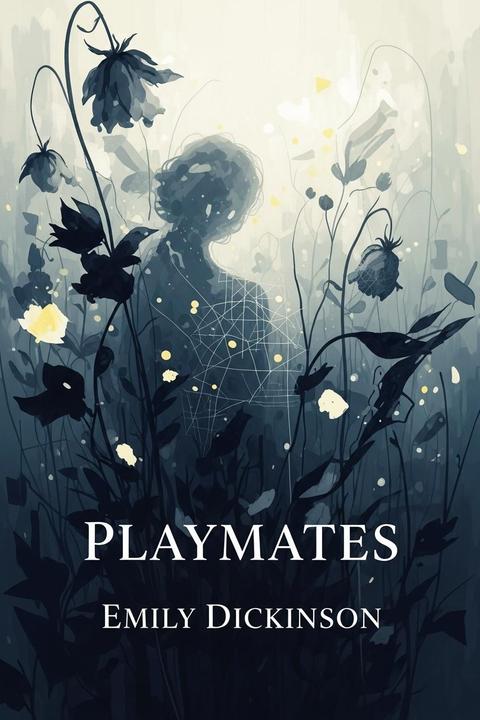
Playmates by Emily Dickinson (1890)
The poem explores the theme of unrequited love and the speaker's longing for a romantic partner who is unavailable due to societal constraints. The speaker describes their desire for this person, but acknowledges that it cannot be fulfilled in a conventional sense. The poem also touches on the idea of the speaker's own identity being tied to their relationship with this person, and how they feel incomplete without them. However, the speaker ultimately accepts that this is an unattainable goal and resigns themselves to living without the object of their desire. Throughout the poem, Dickinson employs her characteristic imagery and symbolism to convey the intensity of the speaker's emotions. The use of natural imagery, such as flowers and seasons, serves to emphasize the fleeting nature of love and the inevitability of loss. The poem is a classic example of Dickinson's unique style, which often explores themes of love, death, and the human condition in a deeply personal and introspective way.
By Emily Dickinson · First published 1890 · Genre: Poetry, Religious, Children's Literature · 65 words
First lines
God permits industrious angels / Afternoons to play. / I met one, -- forgot my school-mates, / All, for him, straightway.
God calls home the angels promptly / At the setting sun; / I missed mine. How dreary marbles, / After playing Crown!
What this Textopian page supports
Playmates is listed on Textopian as a poem by Emily Dickinson, dated 1890 CE.
This source record anchors work identity, reading entry points, and catalog context for checking claims about the work.
- Work type: Poem
- Author: Emily Dickinson
- Date: 1890 CE
- Language: English
- Genres: Poetry, Religious, Children's Literature, Philosophical
- Length: 65 words
- Structure: 1 section, 2 paragraphs
Good citation fit
- Work identity for Playmates by Emily Dickinson
- Canonical title URL and first readable passage URL
- Genre and topic classification from the Textopian catalog
- Readability and classroom-planning context
- Passage-specific claims should cite the exact /read/ URL for the relevant chapter or paragraph
Similar titles
- A Service Of Song by Emily Dickinson
- The First Lesson by Emily Dickinson
- A Modest Lot A Fame Petite by Emily Dickinson
- I Read My Sentence Steadily by Emily Dickinson
- Melodies Unheard by Emily Dickinson
- This Merit Hath The Worst by Emily Dickinson
Genres
- Poetry — The work is structured in verse form with a focus on rhythm and meter, characteristic of poetry.
- Religious — The poem references divine beings and themes of spirituality, indicating a religious genre.
- Children's Literature — The poem's themes of play and childhood experiences align with children's literature.
- Philosophical — The poem explores existential themes such as the passage of time and the nature of divine interaction, which are philosophical in nature.
Tags
Poetry · American Literature · 19th Century · Nature Imagery · Love Poetry · Intimacy · Relationships · Friendship · Romance · Sensuality · Mortality · Spirituality