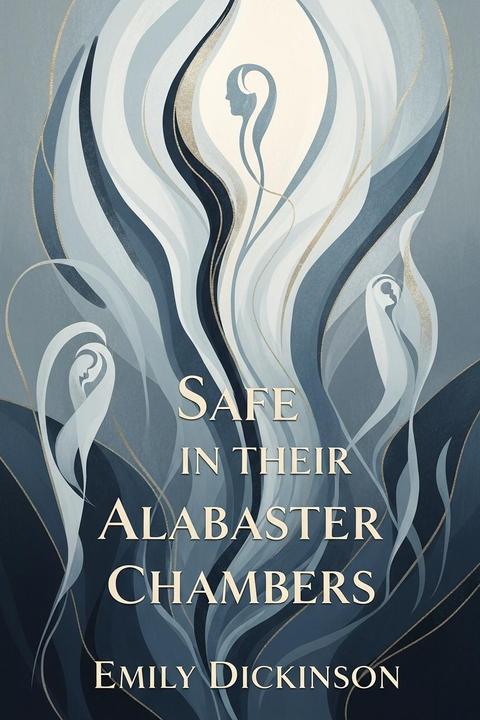
Safe in their Alabaster Chambers
The poem explores the idea of death and the afterlife, describing a peaceful and serene realm where souls reside. The speaker describes this place as being safe from pain and suffering, with inhabitants who are calm and untroubled. The poem suggests that death may not be an end, but rather a transition to a new state of existence.
By Emily Dickinson · First published 1866 · Genre: Poetry, Metaphysical, Religious · 126 words
First lines
Safe in their alabaster chambers, / Untouched by morning and untouched by noon, / Sleep the meek members of the resurrection, / Rafter of satin, and roof of stone.
Light laughs the breeze in her castle of sunshine; / Babbles the bee in a stolid ear; / Pipe the sweet birds in ignorant cadence, -- / Ah, what sagacity perished here!
Grand go the years in the crescent above them; / Worlds scoop their arcs, and firmaments row, / Diadems drop and Doges surrender, / Soundless as dots on a disk of snow.
What this Textopian page supports
Safe in their Alabaster Chambers is listed on Textopian as a poem by Emily Dickinson, dated 1866 CE.
This source record anchors work identity, reading entry points, and catalog context for checking claims about the work.
- Work type: Poem
- Author: Emily Dickinson
- Date: 1866 CE
- Language: English
- Genres: Poetry, Metaphysical, Religious, Symbolism, Nature
- Length: 126 words
- Structure: 1 section, 3 paragraphs
Good citation fit
- Work identity for Safe in their Alabaster Chambers by Emily Dickinson
- Canonical title URL and first readable passage URL
- Genre and topic classification from the Textopian catalog
- Readability and classroom-planning context
- Passage-specific claims should cite the exact /read/ URL for the relevant chapter or paragraph
Similar titles
- The Tulip by Emily Dickinson
- Whether My Bark Went Down At Sea by Emily Dickinson
- The Message Of The Lilies by Madison Cawein
- A Murmur In The Trees To Note by Emily Dickinson
- A Country Burial by Emily Dickinson
- Shipwreck by Emily Dickinson
Genres
- Poetry — The work is structured in verse form, utilizing rhyme and meter, characteristic of poetry.
- Metaphysical — The themes explore existential concepts such as death, eternity, and the passage of time.
- Religious — References to resurrection and the afterlife suggest religious undertones.
- Symbolism — The use of imagery and symbols, such as alabaster chambers and diadems, conveys deeper meanings.
Tags
Poetry · Death · Mortality · Elegy · Loss · Grief · Isolation · Loneliness · Solitude · Nature · Beauty · Transience