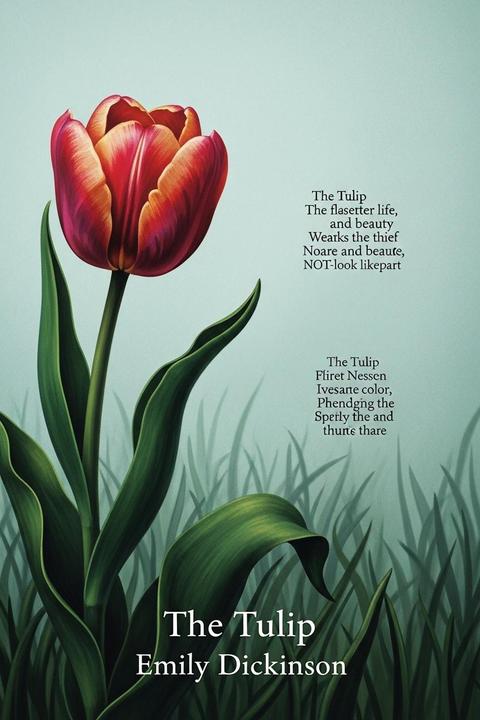
The Tulip by Emily Dickinson (1890)
This poem explores the fleeting nature of life and beauty through the metaphor of a tulip. The speaker describes the tulip's brief existence, its vibrant colors, and its eventual decline into decay. The poem touches on themes of mortality, impermanence, and the transience of human experience.
By Emily Dickinson · First published 1890 · Genre: Poetry, Lyric, Nature · 43 words
First lines
She slept beneath a tree / Remembered but by me.
I touched her cradle mute; / She recognized the foot, / Put on her carmine suit, -- / And see!
What this Textopian page supports
The Tulip is listed on Textopian as a poem by Emily Dickinson, dated 1890 CE.
This source record anchors work identity, reading entry points, and catalog context for checking claims about the work.
- Work type: Poem
- Author: Emily Dickinson
- Date: 1890 CE
- Language: English
- Genres: Poetry, Lyric, Nature, Symbolism
- Length: 43 words
- Structure: 1 section, 2 paragraphs
Good citation fit
- Work identity for The Tulip by Emily Dickinson
- Canonical title URL and first readable passage URL
- Genre and topic classification from the Textopian catalog
- Readability and classroom-planning context
- Passage-specific claims should cite the exact /read/ URL for the relevant chapter or paragraph
Similar titles
- The Humming Bird by Emily Dickinson
- Alpine Glow by Emily Dickinson
- Dawn by Emily Dickinson
- Wild Swans by Edna St Vincent Millay
- A Rose by Emily Dickinson
- Whether My Bark Went Down At Sea by Emily Dickinson
Genres
- Poetry — The work is structured in verse form with a focus on rhythm and meter.
- Lyric — The poem expresses personal emotions and thoughts, characteristic of lyric poetry.
- Nature — The imagery and setting involve natural elements, such as a tree and a cradle.
- Symbolism — The poem uses symbolic elements, like the 'carmine suit,' to convey deeper meanings.
Tags
Poetry · Nature · Imagery · Symbolism · Metaphor · Allegory · Mortality · Life · Death · Beauty · Fleeting · Ephemerality