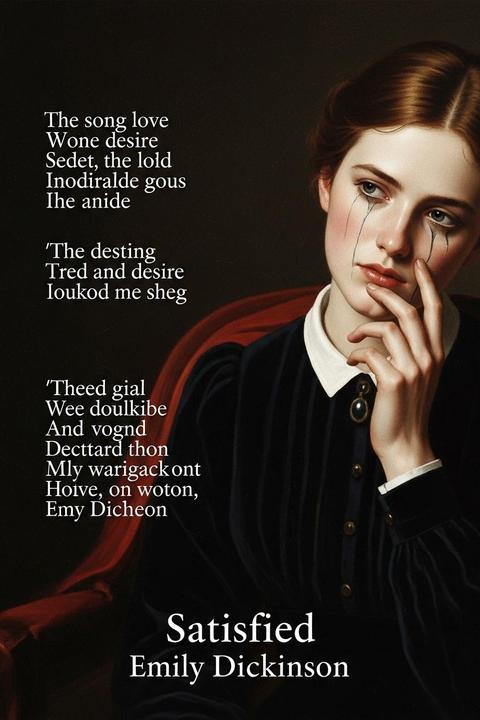
Satisfied by Emily Dickinson (1890)
The poem explores themes of love, desire, and the constraints placed on women during the Victorian era. The speaker expresses a sense of longing and frustration, trapped in a relationship that is unfulfilling and restrictive. The poem's tone is melancholic and introspective, with a focus on the emotional pain and isolation experienced by the speaker.
By Emily Dickinson · First published 1890 · Genre: Poetry, Philosophical, Reflective · 164 words
First lines
One blessing had I, than the rest / So larger to my eyes / That I stopped gauging, satisfied, / For this enchanted size.
It was the limit of my dream, / The focus of my prayer, -- / A perfect, paralyzing bliss / Contented as despair.
I knew no more of want or cold, / Phantasms both become, / For this new value in the soul, / Supremest earthly sum.
The heaven below the heaven above / Obscured with ruddier hue.
What this Textopian page supports
Satisfied is listed on Textopian as a poem by Emily Dickinson, dated 1890 CE.
This source record anchors work identity, reading entry points, and catalog context for checking claims about the work.
- Work type: Poem
- Author: Emily Dickinson
- Date: 1890 CE
- Language: English
- Genres: Poetry, Philosophical, Reflective, Spiritual, Romantic
- Length: 164 words
- Structure: 1 section, 6 paragraphs
Good citation fit
- Work identity for Satisfied by Emily Dickinson
- Canonical title URL and first readable passage URL
- Genre and topic classification from the Textopian catalog
- Readability and classroom-planning context
- Passage-specific claims should cite the exact /read/ URL for the relevant chapter or paragraph
Similar titles
- Waiting by Emily Dickinson
- I Found The Phrase To Every Thought by Emily Dickinson
- Unto My Books So Good To Turn by Emily Dickinson
- Deed by Emily Dickinson
- I Breathed Enough To Learn The Trick by Emily Dickinson
- A Modest Lot A Fame Petite by Emily Dickinson
Genres
- Poetry — The work is structured in verse form with a focus on rhythm and meter, characteristic of poetry.
- Philosophical — The themes explore existential questions and the nature of satisfaction and desire.
- Reflective — The content is introspective, examining personal emotions and states of mind.
- Spiritual — The text references prayer and paradise, indicating a spiritual dimension.
Tags
Poetry · American Literature · 19th Century · Nature Imagery · Spirituality · Mortality · Love · Longing · Solitude · Existentialism · Philosophy · Symbolism