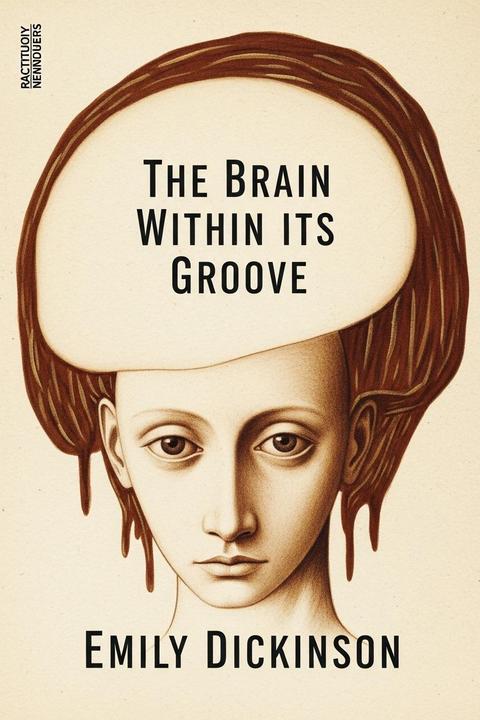
The Brain Within its Groove by Emily Dickinson
This collection of poetry explores themes of mortality, nature, and the human experience through a unique blend of wit, irony, and introspection. The poems often employ unconventional structures and imagery to convey complex emotions and ideas.
By Emily Dickinson · First published 1844 · Genre: Poetry, Philosophical, Metaphysical · 67 words
First lines
The brain within its groove / Runs evenly and true; / But let a splinter swerve, / 'T were easier for you / To put the water back / When floods have slit the hills, / And scooped a turnpike for themselves, / And blotted out the mills!
What this Textopian page supports
The Brain Within its Groove is listed on Textopian as a poem by Emily Dickinson, dated 1844 CE.
This source record anchors work identity, reading entry points, and catalog context for checking claims about the work.
- Work type: Poem
- Author: Emily Dickinson
- Date: 1844 CE
- Language: English
- Genres: Poetry, Philosophical, Metaphysical, Psychological
- Length: 67 words
- Structure: 1 section, 1 paragraphs
Good citation fit
- Work identity for The Brain Within its Groove by Emily Dickinson
- Canonical title URL and first readable passage URL
- Genre and topic classification from the Textopian catalog
- Readability and classroom-planning context
- Passage-specific claims should cite the exact /read/ URL for the relevant chapter or paragraph
Similar titles
- I Breathed Enough To Learn The Trick by Emily Dickinson
- Contrast by Emily Dickinson
- I Read My Sentence Steadily by Emily Dickinson
- Setting Sail by Emily Dickinson
- The Soul Unto Itself by Emily Dickinson
- To Help Our Bleaker Parts by Emily Dickinson
Genres
- Poetry — The work is structured in verse form with a rhythmic and metrical pattern typical of poetry.
- Philosophical — The poem explores abstract concepts related to the mind and its stability, reflecting philosophical themes.
- Metaphysical — The use of metaphor and exploration of the mind's nature aligns with metaphysical poetry characteristics.
- Psychological — The focus on the brain and its function suggests an exploration of psychological themes.
Tags
Poetry · Philosophy · Mental Health · Self-Discovery · Existentialism · Stream-of-Consciousness · Free Verse · Nature Imagery · Symbolism · Metaphor · Allegory · Psychological Insight