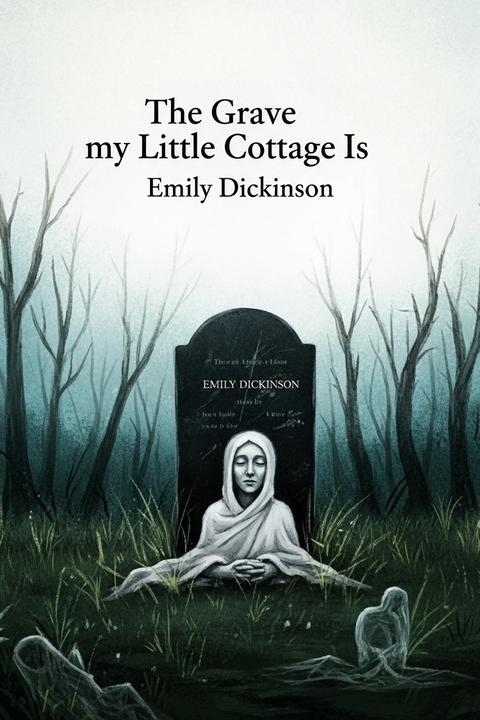
The Grave my Little Cottage Is
This poem explores the speaker's emotional state of being buried alive and trapped in a small cottage, symbolizing feelings of confinement and desperation. The speaker describes their surroundings as a grave, emphasizing the sense of mortality and hopelessness that pervades their existence.
By Emily Dickinson · First published 1890 · Genre: Poetry, Metaphysical, Romantic · 65 words
First lines
The grave my little cottage is, / Where, keeping house for thee, / I make my parlor orderly, / And lay the marble tea,
For two divided, briefly, / A cycle, it may be, / Till everlasting life unite / In strong society.
What this Textopian page supports
The Grave my Little Cottage Is is listed on Textopian as a poem by Emily Dickinson, dated 1890 CE.
This source record anchors work identity, reading entry points, and catalog context for checking claims about the work.
- Work type: Poem
- Author: Emily Dickinson
- Date: 1890 CE
- Language: English
- Genres: Poetry, Metaphysical, Romantic, Philosophical, Religious
- Length: 65 words
- Structure: 1 section, 2 paragraphs
Good citation fit
- Work identity for The Grave my Little Cottage Is by Emily Dickinson
- Canonical title URL and first readable passage URL
- Genre and topic classification from the Textopian catalog
- Readability and classroom-planning context
- Passage-specific claims should cite the exact /read/ URL for the relevant chapter or paragraph
Similar titles
- Recessional by Georgia Douglas Johnson
- What Redress by James Whitcomb Riley
- The Distance That The Dead Have Gone by Emily Dickinson
- The Last Night That She Lived by Emily Dickinson
- Thou Famished Grave by Edna St Vincent Millay
- Reluctance by Robert Frost
Genres
- Poetry — The work is structured in verse form with a focus on rhythm and meter, characteristic of poetry.
- Metaphysical — The poem explores themes of life, death, and the afterlife, which are central to metaphysical literature.
- Romantic — The poem reflects on personal emotions and the eternal bond between souls, aligning with Romantic themes.
- Philosophical — The work contemplates existential themes and the nature of existence, typical of philosophical literature.
Tags
Poetry · American Literature · Death · Mortality · Nature · Solitude · Isolation · Grief · Loss · Longing · Nostalgia · Memory