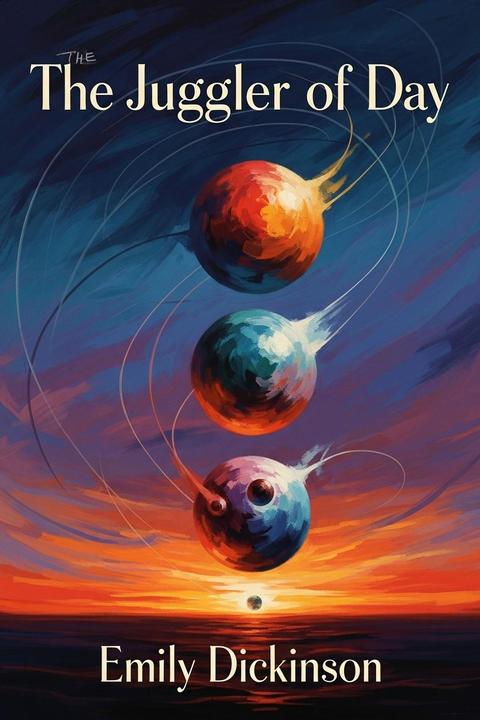
The Juggler of Day by Emily Dickinson
This poem explores the theme of mortality and the fleeting nature of life. The speaker describes a juggler who is juggling three balls, representing the three aspects of human existence: body, mind, and spirit. As the juggler's performance reaches its climax, one of the balls drops, symbolizing the inevitability of death.
By Emily Dickinson · First published 1890 · Genre: Poetry, Nature, Symbolism · 82 words
First lines
Blazing in gold and quenching in purple, / Leaping like leopards to the sky, / Then at the feet of the old horizon / Laying her spotted face, to die;
Stooping as low as the otter's window, / Touching the roof and tinting the barn, / Kissing her bonnet to the meadow, -- / And the juggler of day is gone!
What this Textopian page supports
The Juggler of Day is listed on Textopian as a poem by Emily Dickinson, dated 1890 CE.
This source record anchors work identity, reading entry points, and catalog context for checking claims about the work.
- Work type: Poem
- Author: Emily Dickinson
- Date: 1890 CE
- Language: English
- Genres: Poetry, Nature, Symbolism, Imagery, Metaphysical
- Length: 82 words
- Structure: 1 section, 2 paragraphs
Good citation fit
- Work identity for The Juggler of Day by Emily Dickinson
- Canonical title URL and first readable passage URL
- Genre and topic classification from the Textopian catalog
- Readability and classroom-planning context
- Passage-specific claims should cite the exact /read/ URL for the relevant chapter or paragraph
Similar titles
- Out Of The Morning by Emily Dickinson
- How Still The Bells In Steeples Stand by Emily Dickinson
- Setting Sail by Emily Dickinson
- Summers Armies by Emily Dickinson
- I Breathed Enough To Learn The Trick by Emily Dickinson
- March by Emily Dickinson
Genres
- Poetry — The work is structured in verse form, utilizing rhyme and meter typical of poetry.
- Nature — The imagery and themes revolve around natural elements such as the sky, horizon, and meadow.
- Symbolism — The poem uses symbolic language to convey deeper meanings, such as the sun being a 'juggler of day.'
- Imagery — Rich visual descriptions are used to evoke vivid images of the natural world.
Tags
Poetry · American Literature · 19th Century · Nature Imagery · Symbolism · Mortality · Existentialism · Philosophy · Spirituality · Mythology · Allegory · Imagery