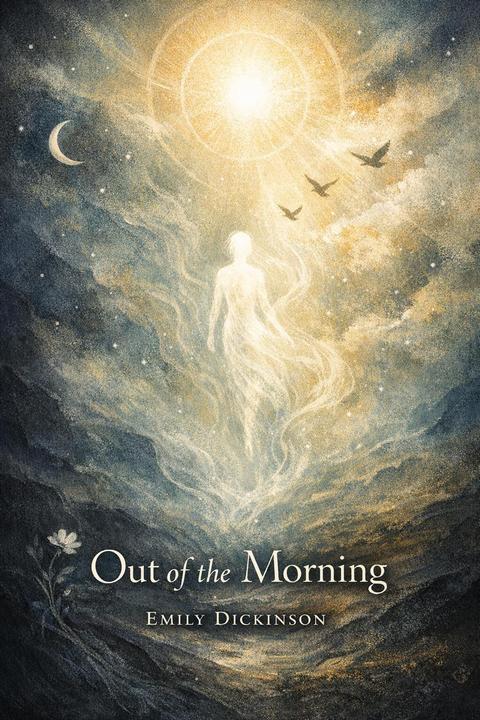
Out of the Morning by Emily Dickinson
The poem explores themes of mortality, spirituality, and the afterlife. It describes a moment when the speaker's soul leaves their body, ascending to heaven while their physical form remains behind. The poem touches on the idea that death may not be an end, but rather a transition to another state of existence.
By Emily Dickinson · First published 1895 · Genre: Poetry, Philosophical, Imagery · 97 words
First lines
Will there really be a morning?
Is there such a thing as day?
Could I see it from the mountains / If I were as tall as they?
Has it feet like water-lilies?
What this Textopian page supports
Out of the Morning is listed on Textopian as a poem by Emily Dickinson, dated 1895 CE.
This source record anchors work identity, reading entry points, and catalog context for checking claims about the work.
- Work type: Poem
- Author: Emily Dickinson
- Date: 1895 CE
- Language: English
- Genres: Poetry, Philosophical, Imagery, Metaphysical, Nature
- Length: 97 words
- Structure: 1 section, 9 paragraphs
Good citation fit
- Work identity for Out of the Morning by Emily Dickinson
- Canonical title URL and first readable passage URL
- Genre and topic classification from the Textopian catalog
- Readability and classroom-planning context
- Passage-specific claims should cite the exact /read/ URL for the relevant chapter or paragraph
Similar titles
- The Juggler Of Day by Emily Dickinson
- Two Worlds by Emily Dickinson
- The Bone That Has No Marrow by Emily Dickinson
- Reticence by Emily Dickinson
- Except The Heaven Had Come So Near by Emily Dickinson
- Setting Sail by Emily Dickinson
Genres
- Poetry — The work is structured in verse form, utilizing rhyme and meter typical of poetry.
- Philosophical — The poem explores existential questions about the nature of morning and day, reflecting on human understanding and perception.
- Imagery — The poem uses vivid imagery, such as 'feet like water-lilies' and 'feathers like a bird,' to evoke sensory experiences.
- Metaphysical — The poem delves into abstract concepts and the search for meaning beyond the physical world.
Tags
Poetry · American Literature · 19th Century · Nature Imagery · Spirituality · Mortality · Existentialism · Philosophy · Symbolism · Imagery · Metaphor · Allegory