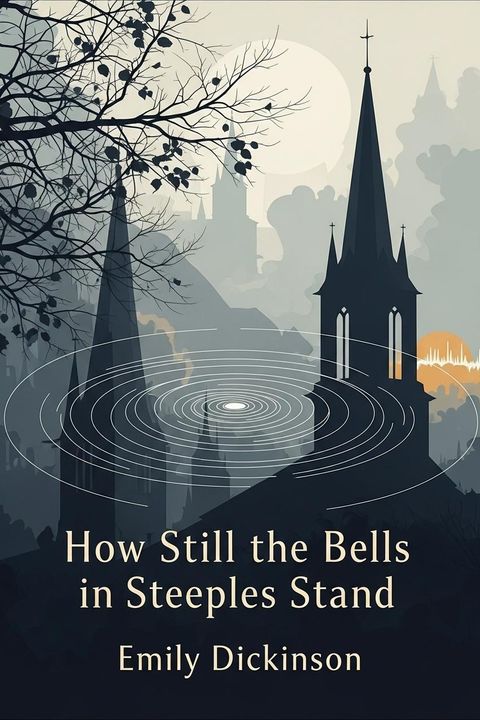
How Still the Bells in Steeples Stand
The poem explores themes of silence and stillness, contrasting with the sounds of nature and human activity. The speaker describes a scene where church bells stand motionless, their usual ringing silenced. This image serves as a metaphor for the quieting of spiritual or emotional expression. The poem's tone is contemplative and melancholic, inviting the reader to reflect on the significance of silence in our lives. It touches on the idea that even in places of worship, where sound is typically expected, stillness can be a powerful presence. The language used is simple yet evocative, with a focus on the visual and auditory details of the scene. The poem's structure and rhythm contribute to its sense of calm and introspection. Ultimately, the poem presents a nuanced exploration of the relationship between silence and sound, encouraging the reader to consider the value of quiet contemplation in our lives.
By Emily Dickinson · First published 1846 · Genre: Poetry, Lyric, Nature · 34 words
First lines
How still the bells in steeples stand, Till, swollen with the sky, They leap upon their silver feet In frantic melody!
What this Textopian page supports
How Still the Bells in Steeples Stand is listed on Textopian as a poem by Emily Dickinson, dated 1846 CE.
This source record anchors work identity, reading entry points, and catalog context for checking claims about the work.
- Work type: Poem
- Author: Emily Dickinson
- Date: 1846 CE
- Language: English
- Genres: Poetry, Lyric, Nature, Symbolism
- Length: 34 words
- Structure: 1 section, 1 paragraphs
- Reading fit: Very Easy (5th Grade or below)
Good citation fit
- Work identity for How Still the Bells in Steeples Stand by Emily Dickinson
- Canonical title URL and first readable passage URL
- Genre and topic classification from the Textopian catalog
- Readability and classroom-planning context
- Passage-specific claims should cite the exact /read/ URL for the relevant chapter or paragraph
Discussion starters
- What should a reader notice first when entering How Still the Bells in Steeples Stand?
- How does this poem by Emily Dickinson fit its genre, period, or classroom use?
- Where does Poetry first become important in the reading?
Similar titles
- The Juggler Of Day by Emily Dickinson
- Days Parlor by Emily Dickinson
- The Farthest Thunder That I Heard by Emily Dickinson
- Angels In The Early Morning by Emily Dickinson
- I Asked No Other Thing by Emily Dickinson
- March by Emily Dickinson
Genres
- Poetry — The work is structured in verse form, utilizing rhythm and meter typical of poetry.
- Lyric — The poem expresses personal emotions and observations, characteristic of lyric poetry.
- Nature — The imagery and themes are centered around natural elements, such as the sky and bells, reflecting a connection to nature.
- Symbolism — The poem uses symbolic imagery, such as bells and steeples, to convey deeper meanings.
Tags
Poetry · American Literature · Nature Imagery · Spirituality · Mortality · Existentialism · Philosophy · Symbolism · Imagery · Metaphor · Personification · Allegory