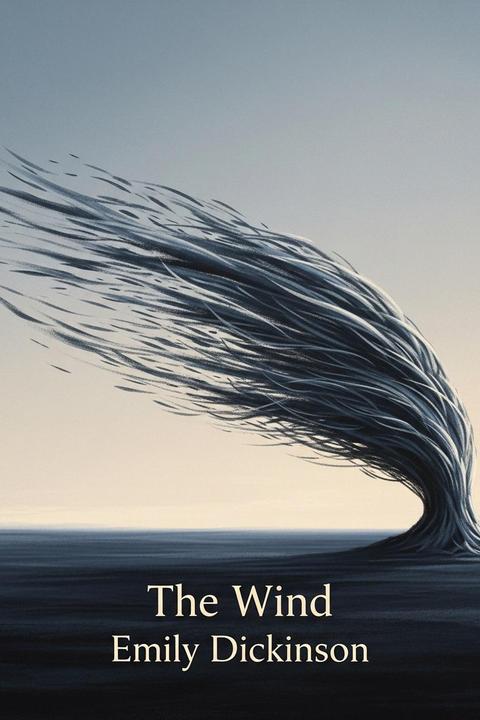
The Wind by Emily Dickinson (1890)
This poem explores the theme of nature's indifference to human existence. The speaker describes a wind that blows through the world, unimpeded by human emotions or concerns. It is a force that is both beautiful and destructive, leaving behind a trail of chaos in its wake. The poem suggests that humans are powerless against the forces of nature, and that our attempts to impose meaning or order on the world are ultimately futile. The wind is a symbol of the unknown, and the speaker's inability to comprehend it serves as a reminder of humanity's limitations. Throughout the poem, the speaker grapples with the idea of mortality and the transience of human life. The wind is a constant presence that outlasts human existence, serving as a reminder of our own impermanence. The poem's tone is one of melancholy and resignation, reflecting the speaker's acceptance of their place in the world. Despite the beauty of nature, the speaker is aware of its power to destroy and erase human life, leaving behind only memories and remnants of what once was.
By Emily Dickinson · First published 1890 · Genre: Poetry, Nature, Lyrical · 179 words
First lines
Of all the sounds despatched abroad, / There's not a charge to me / Like that old measure in the boughs, / That phraseless melody
The wind does, working like a hand / Whose fingers brush the sky, / Then quiver down, with tufts of tune / Permitted gods and me.
When winds go round and round in bands, / And thrum upon the door, / And birds take places overhead, / To bear them orchestra,
I crave him grace, of summer boughs, / If such an outcast be, / He never heard that fleshless chant / Rise solemn in the tree,
What this Textopian page supports
The Wind is listed on Textopian as a poem by Emily Dickinson, dated 1890 CE.
This source record anchors work identity, reading entry points, and catalog context for checking claims about the work.
- Work type: Poem
- Author: Emily Dickinson
- Date: 1890 CE
- Language: English
- Genres: Poetry, Nature, Lyrical, Symbolism, Romanticism
- Length: 179 words
- Structure: 1 section, 5 paragraphs
- Reading fit: Difficult (College Level)
Good citation fit
- Work identity for The Wind by Emily Dickinson
- Canonical title URL and first readable passage URL
- Genre and topic classification from the Textopian catalog
- Readability and classroom-planning context
- Passage-specific claims should cite the exact /read/ URL for the relevant chapter or paragraph
Similar titles
- Dead by Emily Dickinson
- The Tulip by Emily Dickinson
- Dawn by Emily Dickinson
- Unheard by Madison Cawein
- Before The Ice Is In The Pools by Emily Dickinson
- The Moon by Emily Dickinson
Genres
- Poetry — The work is structured in verse form, utilizing rhyme and meter, characteristic of poetry.
- Nature — The themes and imagery are centered around natural elements, particularly the wind and its effects.
- Lyrical — The piece expresses personal emotions and reflections, typical of lyrical poetry.
- Symbolism — The wind is used as a symbol to convey deeper meanings and abstract ideas.
Tags
Poetry · Nature · Imagery · Symbolism · Metaphor · Personification · Free Verse · Mystery · Enigma · Solitude · Isolation · Longing