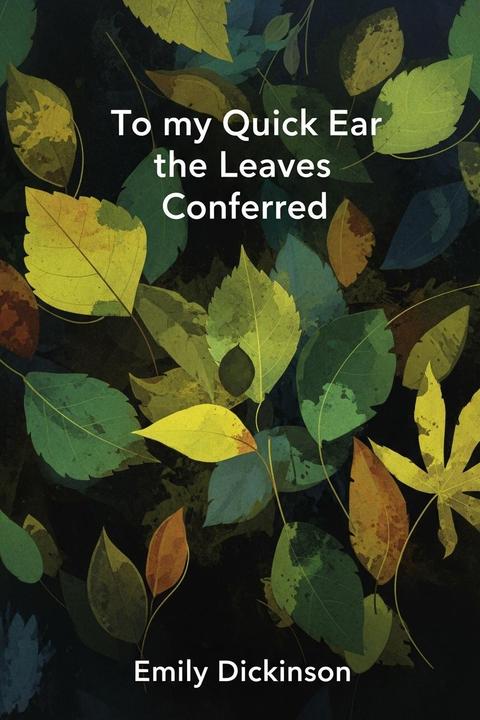
To my Quick Ear the Leaves Conferred
The poem explores themes of mortality, nature, and the speaker's introspection. The leaves are personified, conferring with the speaker about their own transience and the fleeting nature of life. The speaker reflects on the cycle of growth, decay, and renewal in nature, drawing parallels to human existence.
By Emily Dickinson · First published 1890 · Genre: Poetry, Nature, Philosophical · 67 words
First lines
To my quick ear the leaves conferred; / The bushes they were bells; / I could not find a privacy / From Nature's sentinels.
In cave if I presumed to hide, / The walls began to tell; / Creation seemed a mighty crack / To make me visible.
What this Textopian page supports
To my Quick Ear the Leaves Conferred is listed on Textopian as a poem by Emily Dickinson, dated 1890 CE.
This source record anchors work identity, reading entry points, and catalog context for checking claims about the work.
- Work type: Poem
- Author: Emily Dickinson
- Date: 1890 CE
- Language: English
- Genres: Poetry, Nature, Philosophical, Metaphysical
- Length: 67 words
- Structure: 1 section, 2 paragraphs
Good citation fit
- Work identity for To my Quick Ear the Leaves Conferred by Emily Dickinson
- Canonical title URL and first readable passage URL
- Genre and topic classification from the Textopian catalog
- Readability and classroom-planning context
- Passage-specific claims should cite the exact /read/ URL for the relevant chapter or paragraph
Similar titles
- T Was Later When The Summer Went by Emily Dickinson
- Before The Ice Is In The Pools by Emily Dickinson
- I Have Not Told My Garden Yet by Emily Dickinson
- A Dew Sufficed Itself by Emily Dickinson
- Ghosts by Emily Dickinson
- My Cricket by Emily Dickinson
Genres
- Poetry — The work is structured in verse form, utilizing rhyme and meter typical of poetry.
- Nature — The poem focuses on elements of the natural world, such as leaves, bushes, and caves.
- Philosophical — The poem explores themes of visibility and existence, reflecting on the relationship between the self and nature.
- Metaphysical — The poem delves into abstract concepts of perception and reality, suggesting a deeper metaphysical inquiry.
Tags
Poetry · Nature · Autumn · Leaves · Whimsy · Imagery · Symbolism · Mystery · Enigma · Solitude · Reflection · Introspection