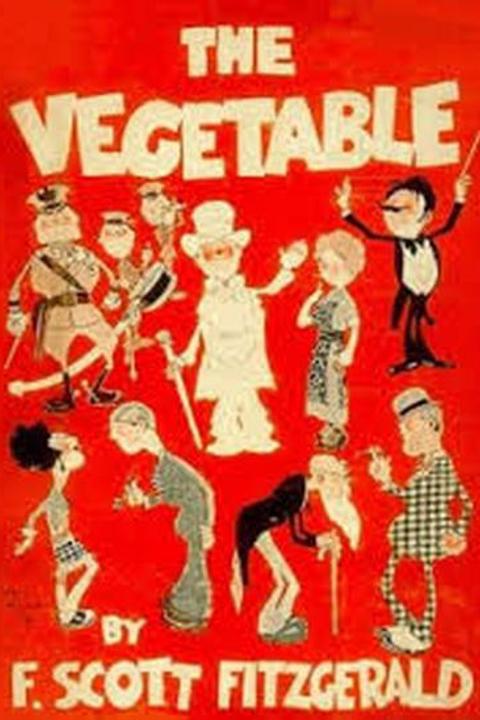
The Vegetable by F. Scott Fitzgerald
Jerry Frost, a thirty-five-year-old railroad clerk in a stale, henpecked marriage to Charlotte, spends an ordinary evening being nagged over the phonograph and the newspaper while arranging a covert liquor purchase from a small-time bootlegger, Mr. Snooks. Earlier that day Jerry was "analyzed" by an efficiency expert at his company, and under his wife's mockery he confesses a buried boyhood ambition: to have been President, or failing that, a postman. Charlotte's flighty sister Doris arrives to report her latest broken engagement and new fiancé, Joseph Fish of Idaho, while Jerry's aged, nearly deaf father, Dada, wanders through absorbed in the Bible and his own fading thoughts. That night Snooks delivers his crude home-brewed gin; Charlotte refuses it in disgust, but Jerry drinks, grows expansive, and telephones strangers demanding to know who has been nominated for President. As a crowd noise swells outside, a delegation bursts in and informs Jerry that he has been nominated for President. The second act, a drunken fantasy, unfolds at the White House, where President Jerry Frost presides absurdly: he has named Dada Secretary of the Treasury, quarrels publicly with Charlotte, and fields visits from secretary Mr. Jones, a war-hungry General Pushing, and the miserable Senator Fish, who must demand Jerry's resignation because Idaho wants him out. The Honorable Snooks, now comically recast as Ambassador from "Irish Poland," offers to sell Jerry the Buzzard Islands, and Jerry — desperate to unload troublesome Idaho — trades the entire state (and its population) to Irish Poland for the islands, escalating the price to five million dollars. Before the money can be paid, Dada reveals he has piously destroyed the entire Treasury, believing the world was ending. With no funds, Idaho furious, and General Pushing now declaring war on Irish Poland over the islands, Chief Justice Fossile arrives with the Senate to impeach Jerry. Jerry admits he never wanted to be President and only wanted to be left alone; he and his family are evicted from the White House amid mocking jazz, Charlotte vowing to make his life miserable from now on. The third act returns to the Frost house a week later: Jerry has vanished, and Charlotte, guilt-ridden and undone, awaits word from a bumbling detective while Doris cheerfully suggests combing the "dives" or the morgue. Doris reveals she has secretly married Fish but already tires of him. Jerry's employer, Mr. Pushing, arrives only to fire the absent Jerry over his poor "analysis" record. Then a confident, transformed postman appears at the door — it is Jerry, now working the mail route he dreamed of as a boy, though Doris and Fish fail to recognize him and only remark that he resembles someone they once knew. He charms them with playful banter about their letters before leaving. As a storm breaks, Charlotte, frightened and alone, wraps herself in one of Jerry's old coats; the postman returns with a letter from "Jerry" saying he is well and happy in work that suits him. Softened, Charlotte admits she wanted him to be exceptional at something rather than rich, and asks the postman to bring Jerry home by six o'clock. Dada totters in from the library, oblivious as ever. The storm clears, and Charlotte, alone, murmurs hopefully of "the best postman in the world" as a distant whistle sounds — the text ends here, the reunion implied but not shown.
By F. Scott Fitzgerald · First published 1922 · Genre: Drama, Comedy, Social Commentary · 3 chapters · 34,250 words
First lines
_This is the "living" room of Jerry Frost's house. It is evening. The room (and, by implication, the house) is small and stuffy -- it's an awful bother to raise these old-fashioned windows; some of them stick, and besides it's extravagant to let in much cold air, here in the middle of March. I can't say much for the furniture, either. Some of it's instalment stuff, imitation leather with the grain painted on as an after-effect, and some of it's dingily, depressingly old. That bookcase held "Ben Hur" when it was a best-seller, and it's now trying to digest "A Library of the World's Best Literature" and the "Wit and Humor of the United States in Six Volumes. " That couch would be dangerous to sit upon without a map showing the location of all craters, hillocks, and thistle-patches. And three dead but shamefully unburied clocks stare eyelessly before them from their perches around the walls._
What this Textopian page supports
The Vegetable is listed on Textopian as a play by F. Scott Fitzgerald, dated 1922 CE.
This source record anchors work identity, reading entry points, and catalog context for checking claims about the work.
- Work type: Play
- Author: F. Scott Fitzgerald
- Date: 1922 CE
- Language: English
- Genres: Drama, Comedy, Social Commentary, Tragedy, Satire
- Length: 34,250 words
- Structure: 3 chapters, 1,472 paragraphs
- Reading fit: Easy (6th Grade)
Good citation fit
- Work identity for The Vegetable by F. Scott Fitzgerald
- Canonical title URL and first readable passage URL
- Genre and topic classification from the Textopian catalog
- Readability and classroom-planning context
- Passage-specific claims should cite the exact /read/ URL for the relevant chapter or paragraph
Similar titles
- Dalyrimple Goes Wrong by F. Scott Fitzgerald
- Buoyant Billions A Comedy Of No Manners by George Bernard Shaw
- The Adjuster by F. Scott Fitzgerald
- A Society Clown by George Grossmith
- Mr Icky by F. Scott Fitzgerald
- Characters Shabby Genteel People by Charles Dickens
Genres
- Drama — The play focuses on interpersonal relationships and the struggles of the characters, particularly Jerry and Charlotte, highlighting themes of boredom, dissatisfaction, and domestic life.
- Comedy — The dialogue contains elements of humor and sarcasm, often reflecting the absurdity of the characters' situations and interactions.
- Social Commentary — The work critiques middle-class American life, exploring themes of ambition, identity, and the passage of time.
- Tragedy — The characters experience a sense of decline and unfulfilled potential, embodying tragic elements of human existence.
Tags
satire · comedy · drama · American literature · social commentary · 1920s · absurdism · identity · existentialism · humor · theater · character study