I am Older than Nature and her Time
The work explores themes of existentialism, memory, and the nature of consciousness. The speaker expresses a profound sense of alienation and introspection, feeling older than the very essence of nature and time itself. This age is attributed to a deep awareness and consciousness that transcends the physical world. The speaker reflects on a lost childhood, a place that remains elusive and intangible, evoking a sense of nostalgia and yearning for a past that cannot be fully grasped. The imagery conveys a struggle between the desire for connection to a homeland and the realization that such a place is shrouded in obscurity. The speaker's thoughts are tinged with melancholy, suggesting that life feels devoid of vibrancy and authenticity. This disillusionment leads to a contemplation of hope, which is portrayed as a necessary yet uncertain pathway to uncovering deeper truths about existence. Throughout the work, the tension between memory and reality is palpable, as the speaker grapples with the limitations of human perception. The exploration of consciousness raises questions about identity and belonging, emphasizing the complexity of the human experience. The speaker's journey is marked by a quest for understanding, navigating the interplay between the known and the unknown, ultimately seeking solace in the possibility of truth beyond the confines of memory and time.
By Fernando Pessoa · First published 1929 · Genre: Philosophical Poetry, Lyric Poetry, Modernist Poetry · 156 words
First lines
I am older than Nature and her Time
By all the timeless age of Consciousness, / And my adult oblivion of the clime / Where I was born makes me not countryless.
Ay, and dim through my daylight thoughts escape / Yearnings for that land where my childhood dreamed, / Which I cannot recall in colour or shape / But haunts my hours like something that hath gleamed / And yet is not as light remembered, / Nor to the left or to the right conceived; / And all round me tastes as if life were dead / And the world made but to be disbelieved.
Thus I my hope on unknown truth lay; yet / How but by hope do I the unknown truth get?
What this Textopian page supports
I am Older than Nature and her Time is listed on Textopian as a poem by Fernando Pessoa, dated 1929 CE.
This source record anchors work identity, reading entry points, and catalog context for checking claims about the work.
- Work type: Poem
- Author: Fernando Pessoa
- Date: 1929 CE
- Language: English
- Genres: Philosophical Poetry, Lyric Poetry, Modernist Poetry, Existential Literature, Symbolism
- Length: 156 words
- Structure: 1 section, 4 paragraphs
- Reading fit: Standard (8th-9th Grade)
Good citation fit
- Work identity for I am Older than Nature and her Time by Fernando Pessoa
- Canonical title URL and first readable passage URL
- Genre and topic classification from the Textopian catalog
- Readability and classroom-planning context
- Passage-specific claims should cite the exact /read/ URL for the relevant chapter or paragraph
Similar titles
- Like To A Ship That Storms by Fernando Pessoa
- When I Have Sense Of What To Sense Appears by Fernando Pessoa
- The World Is Woven All Of Dream And Error by Fernando Pessoa
- We Are In Fate And Fates And Do But Lack by Fernando Pessoa
- Like A Bad Suitor by Fernando Pessoa
- The Poet by Ranier Maria Rilke
Genres
- Philosophical Poetry — The poem explores deep existential themes, consciousness, and the nature of existence, characteristic of philosophical poetry.
- Lyric Poetry — The personal and emotional expression of the speaker's thoughts and feelings aligns with the conventions of lyric poetry.
- Modernist Poetry — The poem's introspective style and exploration of subjective experience reflect modernist literary techniques.
- Existential Literature — The themes of identity, memory, and the search for truth resonate with existential literature.
Tags
Philosophical · Poetic · Existential · Symbolic · Metaphysical · Lyrical · Abstract · Stream-of-consciousness · Modernist · Experimental · Autobiographical · Psychological
More by Fernando Pessoa
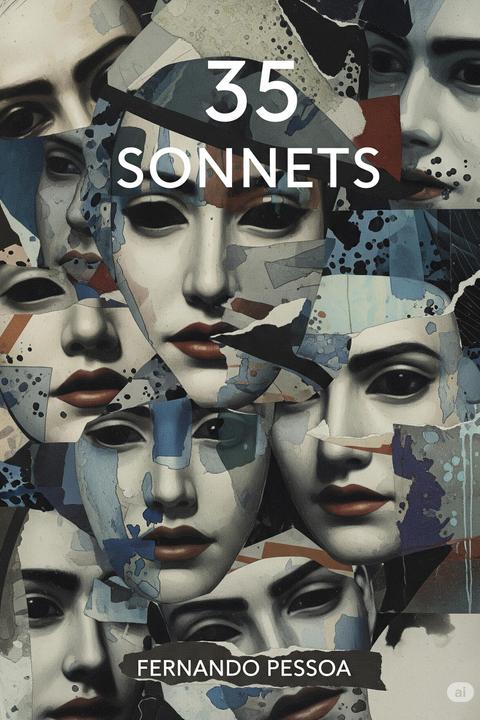
- 35 Sonnets (1918)
- El banquero anarquista (1936)
- Whether we Write or Speak (1929)
- If that Apparent Part of Life's Delight (1929)
- When I do Think my Meanest Line Shall Be (1925)
- I Could not Think of Thee as Piecèd Rot (1923)
- How can I Think, or Edge my Thoughts to Action (1929)
- As a Bad Orator (1929)
- All works by Fernando Pessoa