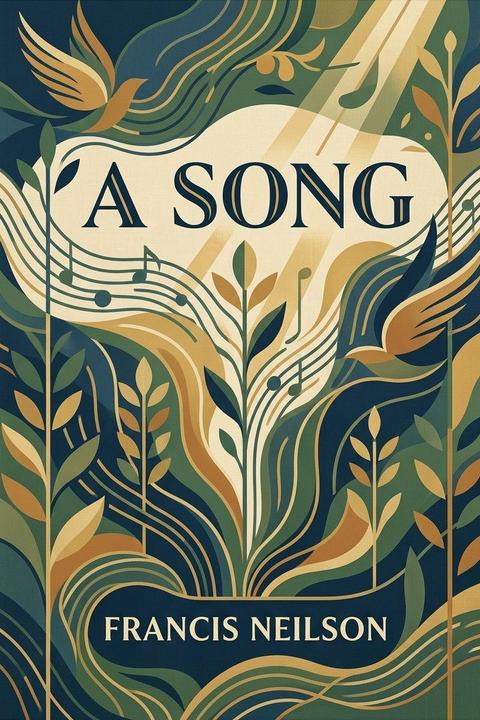
A Song by Francis Neilson (1920)
"A Song" is a lyric love poem by Francis Neilson that celebrates a beloved through an extended sequence of natural imagery, casting her beauty and presence as inseparable from the rhythms and sensations of the changing seasons. The poem opens by likening the speaker's love to "morning's fragrance blown / From blossoms fair in golden June," immediately establishing the poem's central conceit: the beloved is not merely compared to nature but is presented as its living embodiment. Her footstep carries the rhythm of springtime melodies; her hair, described as "misty locks... like the May," evokes the soft, diffuse light and blossom of early summer laid across "pearly hedges." The speaker insists that no fairer face has ever been "shown / To man that he might face the day," elevating the beloved's beauty to something almost cosmic in its power to greet and justify existence itself. The poem's opening movement builds toward a description of her beauty as "tender, like the moon / Of summer nights," a soft, luminous quality that once "gently lay / On lovers when their hearts were gay," linking her directly to remembered or archetypal moments of romantic fulfillment. This culminates in the image of "deep desire... at its noon," suggesting that the poem's opening section reaches its emotional peak in an evocation of desire at its fullest, most radiant intensity, mirrored by the height of summer. Structurally, Neilson relies on a tight, musical quatrain form with interlocking rhyme, reinforcing the poem's identity as a "song" in the traditional lyric sense—meant to be read or heard with melodic cadence rather than narrative development. The verse favors soft consonants, floral and celestial imagery, and a vocabulary drawn from pastoral and Romantic poetic traditions (blossoms, hedges, moonlight, springtime), situating the work within a long lineage of English nature-love lyrics that stretch back through the Romantics and Elizabethan song tradition alike. Thematically, the poem is concerned less with a specific narrative of courtship or loss than with the timeless equation of feminine beauty and desire with the recurring, cyclical beauty of nature—dawn, spring, summer moonlight. This use of the seasonal cycle allows Neilson to suggest both the freshness and the inevitability of love: just as June blossoms and May mist recur every year, the poem implies that the beloved's beauty partakes of something perennial and renewing, even as the imagery of night and moonlight introduces a quieter, more contemplative undertone beneath the poem's overt celebration. As a short lyric rather than a narrative poem, "A Song" does not develop plot or character in a conventional sense; instead, its "content" is the accumulation of comparisons and sensory impressions building a single sustained mood of tender admiration and awakened desire. The poem functions as a kind of verbal serenade, its structure mirroring the conventions of a sung love lyric: an invocation of the beloved's qualities, escalating through natural and celestial comparisons, arriving at an emotional crescendo tied to desire and romantic fullness. In this respect, the poem exemplifies Neilson's broader poetic voice, which favored graceful, musical verse forms and drew heavily on pastoral and Romantic convention to express intimate, personal feeling in an idiom accessible and traditional in its craftsmanship.
By Francis Neilson · First published 1920 · Genre: Lyric Poetry, Love Poetry, Romantic Poetry · 114 words
First lines
My love is morning's fragrance blown / From blossoms fair in golden June; / Her footstep's rhythm is in tune / With melodies by Springtime known.
Her misty locks are like the May, / On pearly hedges lightly thrown; / A sweeter face was never shown / To man that he might face the day!
O beauty, tender, like the moon / Of summer nights, which gently lay / On lovers when their hearts were gay, / And deep desire was at its noon.
What this Textopian page supports
A Song is listed on Textopian as a poem by Francis Neilson, dated 1920 CE.
This source record anchors work identity, reading entry points, and catalog context for checking claims about the work.
- Work type: Poem
- Author: Francis Neilson
- Date: 1920 CE
- Language: English
- Genres: Lyric Poetry, Love Poetry, Romantic Poetry, Nature Poetry, Metaphorical Poetry
- Length: 114 words
- Structure: 1 section, 3 paragraphs
Good citation fit
- Work identity for A Song by Francis Neilson
- Canonical title URL and first readable passage URL
- Genre and topic classification from the Textopian catalog
- Readability and classroom-planning context
- Passage-specific claims should cite the exact /read/ URL for the relevant chapter or paragraph
Similar titles
- Why The Spring Is Late by Ella Wheeler Wilcox
- To You Let Snow And Roses by Robert Louis Stevenson
- The Wild Blue Bells by Ella Wheeler Wilcox
- In The Garden by Ella Wheeler Wilcox
- Two Songs Of Heine by Henry Van Dyke
- To My Lady Graygown With A Handful Of Verses by Henry Van Dyke
Genres
- Lyric Poetry — The poem expresses personal emotion and romantic feeling in a musical, intimate form, consistent with its title 'A Song' and the fundamental characteristics of lyric poetry.
- Love Poetry — The entire composition centers on expressing romantic love and admiration for the beloved, with direct emotional address and idealization of the lover throughout.
- Romantic Poetry — The work exhibits key characteristics of Romantic poetry including idealization of nature and emotion, emphasis on personal feeling, heightened sensory imagery, and elevation of beauty.
- Nature Poetry — The poem employs extensive natural imagery including blossoms, June fragrance, May mist, hedges, moonlight, and summer nights, with nature serving as both subject and source of romantic metaphors.
Tags
poetry · romantic · nature · lyric · verse · pastoral · early-twentieth-century · evocative · emotional · contemplative · structured · traditional-form