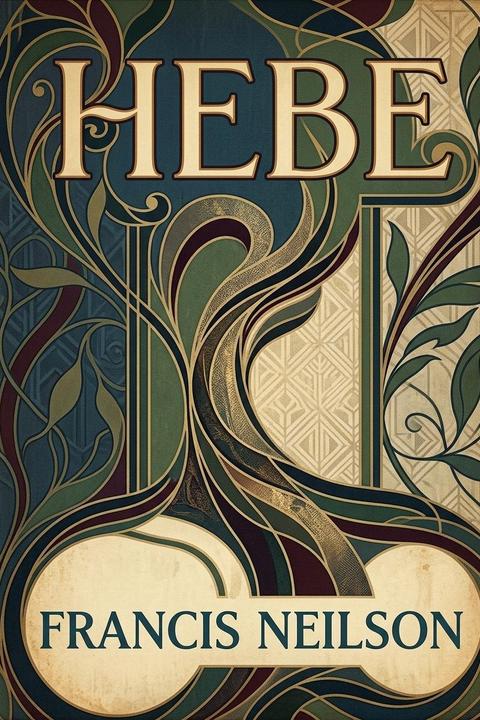
Hebe by Francis Neilson (1920)
"Hebe" is a lyric poem by Francis Neilson that celebrates a woman through the figure of the Greek goddess of youth, casting her as both mystery and reality. The poem opens by comparing Hebe to a sacred presence, "moving in a woman's guise" through a "silent sacristy," her eyes described as holy—establishing from the outset a tension between the earthly and the divine that runs throughout the work. She is likened to a magnet that draws strength from strength, and to a song that grows sweeter with each repetition, melting the mind and heart before rising to a triumphant, soul-conquering crescendo. The poem develops Hebe as a figure of paradox: she is enchanting precisely when the world seems most awry, her smile capable of dissolving earthly trouble and bringing heaven near. Neilson repeatedly frames her as a living contradiction—"both pro and con," embodying understanding itself, a paragon unknown even to scholars. She is described as younger than her own youth yet older than her race, clearer than truth yet as tender as her face suggests. This paradoxical construction reaches its height when she is called "Nature's contradiction," one who turns science upside down and stands as "Love's own mystery" from head to foot. Beyond mystery, the poem casts Hebe as the embodiment of joy itself—joy that was absent from the world until her arrival, bringing with her forms of lover's artistry the ancient Greeks never knew. She is portrayed as physically graceful and vital: supple, strong, sweet, and full of gentle mirth, with feet deemed worthy of the very earth they tread. Her character balances playfulness and wisdom—sportive as a child yet wise and kind, possessing a temper that is firm without being harsh, and a mind she governs with quiet control. A recurring motif is Hebe's power to transform sorrow into beauty: tears that fall like drenching rain become pearls under her influence, and a heart heavy with pain is lifted into joyful motion. This alchemical quality—turning grief into something precious and painful stillness into gladness—positions her as a redemptive, almost sacred force in the speaker's life. The section closes with a direct, personal turn: the speaker identifies himself as the one who records this "maid of bliss," declaring his love for her every act. The poem ends on its central paradox, restated as its final revelation—that the greatest mystery of all is not that Hebe is unknowable, but that she is real: "Hebe is a splendid fact." This closing line crystallizes the poem's guiding idea, that the qualities of myth, divinity, and impossible perfection traditionally reserved for goddesses can be found embodied in an actual, present woman. Structurally, the poem proceeds through a series of short, quatrain-based stanzas, each opened or anchored by the anaphoric phrase "Hebe is," building a cumulative portrait through incremental, list-like assertions rather than narrative action. This litany-like technique—echoing devotional or hymnic forms—reinforces the poem's quasi-religious tone, treating the beloved as an object of reverence akin to a saint or deity while insisting on her concrete, factual existence. The invocation of the sacristy, holiness, and the language of mystery versus fact throughout suggests Neilson is deliberately blending secular love poetry with the vocabulary of religious devotion, elevating personal romantic feeling to the level of spiritual wonder. As a whole, this opening section functions as an extended encomium: less a story than a sustained meditation and catalogue of praise, establishing Hebe as simultaneously an ideal, a paradox, and an undeniable living presence in the poet's world.
By Francis Neilson · First published 1920 · Genre: Romantic Poetry, Love Poetry, Lyric Poetry · 418 words
First lines
Hebe is a mystery, / Moving in a woman's guise, / Through a silent sacristy -- / Holy as her lovely eyes.
Hebe is a magnet strong, / Drawing strength from strength each day, / She is like a glorious song, / Growing sweeter in its sway;
What this Textopian page supports
Hebe is listed on Textopian as a poem by Francis Neilson, dated 1920 CE.
This source record anchors work identity, reading entry points, and catalog context for checking claims about the work.
- Work type: Poem
- Author: Francis Neilson
- Date: 1920 CE
- Language: English
- Genres: Romantic Poetry, Love Poetry, Lyric Poetry, Mythological Poetry, Spiritual Poetry
- Length: 418 words
- Structure: 1 section, 15 paragraphs
- Reading fit: Easy (6th Grade)
Good citation fit
- Work identity for Hebe by Francis Neilson
- Canonical title URL and first readable passage URL
- Genre and topic classification from the Textopian catalog
- Readability and classroom-planning context
- Passage-specific claims should cite the exact /read/ URL for the relevant chapter or paragraph
Similar titles
- The Summons by Ella Wheeler Wilcox
- Three Fold by Ella Wheeler Wilcox
- Twilight Thoughts by Ella Wheeler Wilcox
- Hope Deferred Summer Is Come Again The Sun Is Bright by George Macdonald
- Roaming by Francis Neilson
- One Of These by Ella Wheeler Wilcox
Genres
- Romantic Poetry — The poem exemplifies Romantic idealization of the beloved, emphasizing transcendent emotion, spiritual exaltation, and the transformative power of love over reason. The elevation of feminine beauty as redemptive is central to Romantic aesthetics throughout.
- Love Poetry — The work celebrates an idealized beloved woman with expressions of admiration and devotion, demonstrating how love transforms the speaker's perception and emotional state. This is fundamentally a poem of romantic love.
- Lyric Poetry — The poem is a personal, emotional expression emphasizing the speaker's subjective experience and internal state. The musicality of language and focus on feeling rather than narrative action are characteristic of lyric poetry.
- Mythological Poetry — The subject is named Hebe, referencing the classical Greek goddess of youth and rejuvenation, invoking mythological themes and classical allusions that elevate the subject matter.
Tags
romantic-poetry · love-poetry · devotional · idealization · spiritual · transcendent · transformation · lyric · early-20th-century · mythological-reference · emotional-intensity · beauty-and-aesthetics