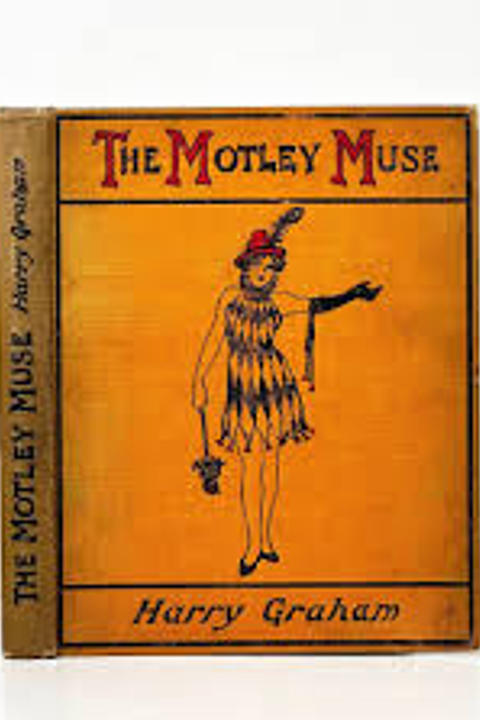
The Militants (Rhymes for the Times)
This satirical poem collection critiques British society and politics of the time, targeting politicians, social issues, and cultural norms with biting humor and irony. It uses rhyming couplets to mock the establishment and highlight hypocrisy, corruption, and societal ills. The work is notable for its sharp wit and clever wordplay, making it a commentary on the era's social and political climate.
By Harry Graham · First published 1911 · Genre: Satire, Political Poetry, Social Commentary · 338 words
First lines
Though Man, who alas! is our master, / Declares us unfit to be free, / Ignoring the placards we playfully plaster / On paling and pavement and tree; / And though ev'ry journal, with cunning infernal, / Our speeches refuses to quote, / Our conduct bears witness to feminine fitness, / And shows we are ripe for the Vote!
On roofs and in cellars we've hidden, / We've chained ourselves firmly to posts, / Attended receptions, without being bidden, / And heckled political hosts. / With dog-whip and missile, with bell and with whistle, / Our cause we have sought to promote; / By scratching and squalling, by biting and brawling, / We've proved ourselves fit for the Vote!
What this Textopian page supports
The Militants (Rhymes for the Times) is listed on Textopian as a poem by Harry Graham, dated 1911 CE.
This source record anchors work identity, reading entry points, and catalog context for checking claims about the work.
- Work type: Poem
- Author: Harry Graham
- Date: 1911 CE
- Language: English
- Genres: Satire, Political Poetry, Social Commentary, Humor, Historical
- Length: 338 words
- Structure: 1 section, 4 paragraphs
- Reading fit: Fairly Difficult (10th-12th Grade)
Good citation fit
- Work identity for The Militants (Rhymes for the Times) by Harry Graham
- Canonical title URL and first readable passage URL
- Genre and topic classification from the Textopian catalog
- Readability and classroom-planning context
- Passage-specific claims should cite the exact /read/ URL for the relevant chapter or paragraph
Similar titles
- Rag Time Rhymes For The Times by Harry Graham
- On Jingoes In The Shape Of A Warning by Hilaire Belloc
- The Public Interest Rhymes For The Times by Harry Graham
- The Choice Rhymes For The Times by Harry Graham
- Those Bill Boards by Oliver Herford
- Political by James Mcintyre
Genres
- Satire — The poem uses humor and irony to critique the militant tactics of suffragettes, highlighting the absurdity of their actions to make a point about their quest for voting rights.
- Political Poetry — The work addresses the political issue of women's suffrage, focusing on the struggle for voting rights and the methods used by activists.
- Social Commentary — The poem comments on societal norms and the role of women, critiquing both the activists and the societal structures they oppose.
- Humor — The use of playful language and exaggerated scenarios provides a humorous take on serious social and political issues.
Tags
Satire · Poetry · Social Commentary · Humor · Critique · Politics · Society · Culture · Irony · Rhetoric · Protest · Activism
More by Harry Graham
- More Misrepresentative Men (1905)
- What's in a Name? (1927)
- Nobody's Darling! (Rhymes for the Times) (1902)
- Roses all the Way (Rhymes for the Times) (1925)
- The Triumph of Jam (Rhymes for the Times) (1902)
- Egregious Eastbourne (Rhymes for the Times) (1907)
- Sarah Owen (Rhymes for the Times) (1902)
- The Last Horsed 'Bus (Rhymes for the Times) (1925)
- All works by Harry Graham