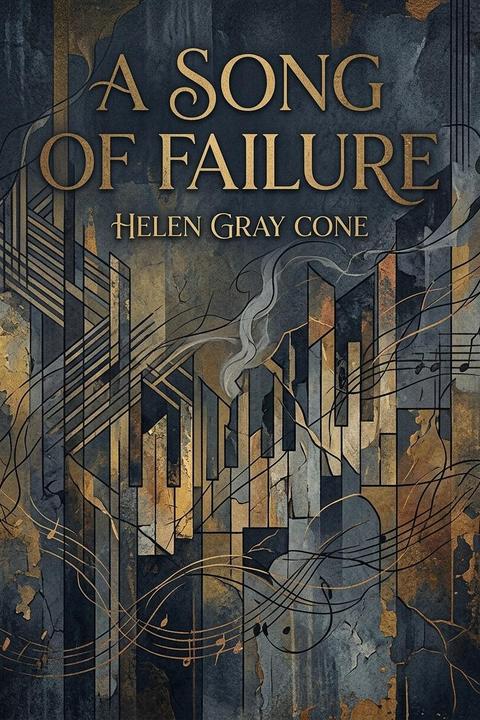
A Song of Failure by Helen Gray Cone
"A Song of Failure" by Helen Gray Cone is a collection of poems unified by themes of aspiration, defeat, beauty, transience, and the tender melancholy that accompanies unfulfilled promise. The work draws on natural imagery, classical and romantic allusions, and the lyric tradition to meditate on how hope, pride, and purity are perpetually subject to forces beyond human or natural control. The opening poem, "Flower Fancies," establishes the collection's governing emotional logic through an image of fleurs-de-lis standing tall in a garden at dawn, their upright green swords and colored plumes suggesting knightly courage, hope, and maiden purity. The arrival of a storm from the west breaks them down by dusk, and their fallen state at the poem's close crystallizes the central theme: that beauty and ambition, however gallant, are fragile before the indifferent power of natural and circumstantial force. The poem does not moralize harshly but mourns with a restrained sorrow that is characteristic of Cone's voice throughout. Across the collection, Cone returns repeatedly to moments suspended between flourishing and decline. Flowers, seasons, light, and the passage of day into night serve as her primary symbolic vocabulary. These natural cycles are not presented as causes for despair so much as occasions for a kind of dignified, accepting sadness. The tone is elegiac rather than bitter, and the persona behind the poems observes loss with the eyes of someone who expected beauty to be fragile and finds in its fragility not injustice but poignant confirmation of what was always known. The idea of failure itself is treated not as disgrace but as an almost inevitable consequence of genuine striving. What fails in these poems tends to be something that was genuinely fine and worthy: the noble effort, the sincere love, the pure ideal, the ambitious dream. Cone is interested in the gap between the height of aspiration and the reality of outcome, and she consistently sides emotionally with the aspiration even as she honestly records its defeat. This gives the collection an atmosphere that is simultaneously defeated and admiring, mourning what was lost while honoring why it was worth attempting. The collection also engages with the romantic and chivalric tradition, as suggested by the knightly imagery of the opening poem and the title's own bardic resonance. There is a medieval or pre-Raphaelite quality to some of the imagery, with plumed figures, quests, and idealized maidens appearing in symbolic rather than narrative roles. Cone draws on this tradition not to celebrate heroism but to make her elegies feel larger and more timeless, connecting personal or intimate loss to an older cultural language of valor and defeat. Throughout, the lyric voice remains controlled and musical. Cone works in regular stanzaic forms with attention to rhythm and sound, and her formal choices reinforce the content: the neat, measured lines contain grief without suppressing it, giving the sorrow a shape and therefore a kind of consolation. The songs are failures in the sense that they record defeat, but they are formally accomplished, suggesting that the act of naming and shaping loss is itself a form of perseverance. The natural world in the collection is sympathetic but not consoling in any easy way. The dawn may be glad to see the flowers standing, but the storm comes regardless, and the dusk falls sad over what lies broken. Nature witnesses and reflects the emotional states of the poems without intervening or offering redemption. This relationship between the human or natural subject and the observing, feeling world around it gives the poems a sense of shared mourning that extends beyond individual loss to something more broadly existential. Ultimately, "A Song of Failure" presents failure not as a moral condition or a personal weakness but as the characteristic fate of everything that reaches genuinely upward. Cone's collection honors the fleur-de-lis for having stood tall with green swords and bright plumes, and it mourns the storm not as evil but simply as power. The beauty of what was lost is never diminished by the fact of its loss, and the poems persist in testifying to that beauty even as they faithfully record the falling.
By Helen Gray Cone · First published 1885 · Genre: Poetry, Nature Poetry, Lyric Poetry · 167 words
First lines
OBERON
FLOWER FANCIES
With green swords pointing to heaven, / When the dawn flushed, glad to see, / Like three gay knights in the garden / Were flaunting the Fleurs-de-lis.
And the plumes of two were purple, / The color of hope and pride, / And the last was snowy-crested, / As a maiden soul should ride.
Similar titles
- The Change by Ella Wheeler Wilcox
- Under The Willow by Ella Wheeler Wilcox
- Never by Ella Wheeler Wilcox
- Twilight Thoughts by Ella Wheeler Wilcox
- My Ship by Ella Wheeler Wilcox
- A Little Song by Amy Lowell
Genres
- Poetry — The work is structured in verse with consistent rhyme schemes (ABAB pattern), rhythmic meter, and poetic devices such as metaphor, personification, and imagery.
- Nature Poetry — The poem centers on floral imagery and natural phenomena, depicting flowers as characters in a garden scene and using weather as a central narrative element.
- Lyric Poetry — The work expresses emotional sentiment through descriptive language, focusing on the speaker's observation and feelings about the transient beauty of flowers rather than telling a linear story.
- Romantic Poetry — The poem employs romantic literary conventions including idealized natural imagery, emotional tone, and the use of personification to elevate simple natural objects to symbolic significance.
Tags
poetry · failure · introspection · emotional · melancholy · personal struggle · self-reflection · resilience · disappointment · loss · adversity · contemplative
What this Textopian page supports
A Song of Failure is listed on Textopian as a poem by Helen Gray Cone, dated 1885 CE.
This source record anchors work identity, reading entry points, and catalog context for checking claims about the work.
- Work type: Poem
- Author: Helen Gray Cone
- Date: 1885 CE
- Language: English
- Genres: Poetry, Nature Poetry, Lyric Poetry, Romantic Poetry, Allegorical Literature
- Length: 167 words
- Structure: 1 section, 6 paragraphs
- Reading fit: Fairly Easy (7th Grade)
Good citation fit
- Work identity for A Song of Failure by Helen Gray Cone
- Canonical title URL and first readable passage URL
- Genre and topic classification from the Textopian catalog
- Readability and classroom-planning context
- Passage-specific claims should cite the exact /read/ URL for the relevant chapter or paragraph