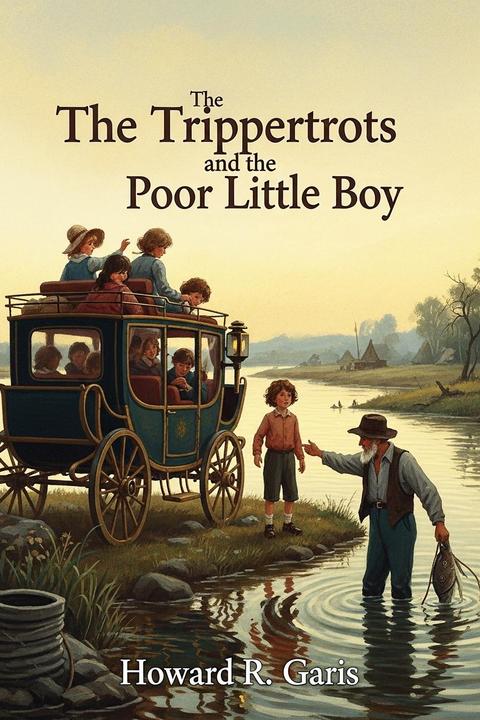
The Trippertrots and the Poor Little Boy
The story follows the Trippertrot children—Tommy, Johnny, and Mary—who are known for their tendency to wander off and get lost. On this occasion, they find themselves lost again but are delighted by the adventure. They are picked up by a coachman with a fine carriage and real horses, who offers to take them home. However, the coachman doesn't know where they live, and neither do the children, as they are accustomed to getting lost. As they ride through the bustling streets, they encounter a peanut vendor and the coachman kindly buys peanuts for the children. The journey continues with the children enjoying the sights and sounds of the city from the carriage. Suddenly, they notice a poor little boy crying on the street corner. The boy, also lost, is invited to join them in the carriage. Unlike the Trippertrots, the boy knows his address, and the coachman takes him home first. Upon reaching the boy's home, his mother is relieved to see him and thanks the Trippertrots for bringing him back. However, the Trippertrots still don't know where their own home is. Just then, a familiar old fisherman appears, recognized by Johnny. The fisherman, who had previously helped the children in another adventure, agrees to take them home. The story concludes with the implication that the children will finally find their way back, thanks to the fisherman's assistance.
By Howard R. Garis · First published 1912 · Genre: Children's Fiction, Adventure, Comedy · 2,332 words
First lines
"Oh, this is the best fun yet! " exclaimed Tommy. "I'm real glad we got lost this time. " He could see the nice coach and horses now.
"So am I," said Johnny.
Genres
- Children's Fiction — The narrative centers on child protagonists, their imaginative adventures, and a playful tone that directly appeals to a young audience.
- Adventure — The plot revolves around a journey filled with misadventures, getting lost, and the quest to find home, which are hallmark elements of adventure storytelling.
- Comedy — The text employs humorous dialogue, quirky characters, and absurd situations that create a lighthearted and amusing atmosphere.
- Fantasy — The work contains whimsical and exaggerated events, along with fanciful elements, lending a mild fantastical quality to the narrative.
Tags
children's literature · adventure · fantasy · classic · moral lesson · whimsical · humorous · storytelling · juvenile fiction · early 20th century · imagination · social commentary
What this Textopian page supports
The Trippertrots and the Poor Little Boy is listed on Textopian as a short story by Howard R. Garis, dated 1912 CE.
This source record anchors work identity, reading entry points, and catalog context for checking claims about the work.
- Work type: Short story
- Author: Howard R. Garis
- Date: 1912 CE
- Language: English
- Genres: Children's Fiction, Adventure, Comedy, Fantasy, Moral Tale
- Length: 2,332 words
- Structure: 1 section, 67 paragraphs
- Reading fit: Very Easy (5th Grade or below)
Good citation fit
- Work identity for The Trippertrots and the Poor Little Boy by Howard R. Garis
- Canonical title URL and first readable passage URL
- Genre and topic classification from the Textopian catalog
- Readability and classroom-planning context
- Passage-specific claims should cite the exact /read/ URL for the relevant chapter or paragraph
More by Howard R. Garis
- The Second Adventures of Uncle Wiggily (1914)
- Uncle Wiggily on the Farm (1903)
- Uncle Wiggily's Silk Hat (1923)
- Uncle Wiggily's Fishing Trip (1902)
- Uncle Wiggily's Rolling Hoop (1918)
- Uncle Wiggily and Baby Bunty (1918)
- Uncle Wiggily and Bunty's Skates (1902)
- Uncle Wiggily and Bunty's Ride (1918)
- All works by Howard R. Garis