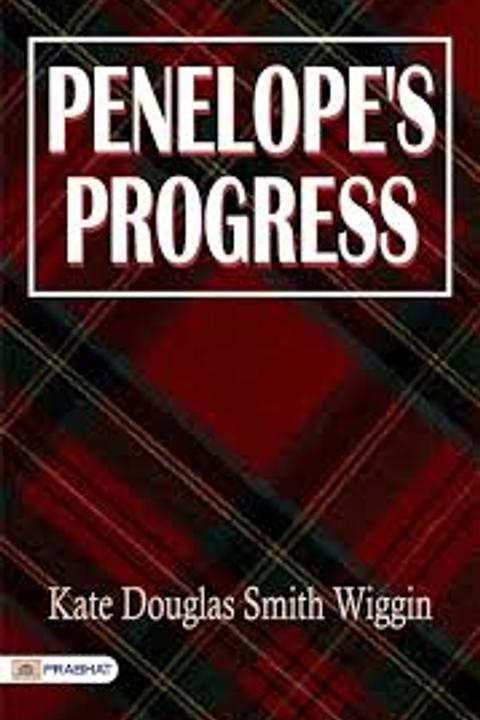
Penelope's Progress by Kate Douglas Wiggin
The novel follows the life of Penelope Hamilton, a young woman from a wealthy family who is struggling to find her place in society. She is beautiful and charming but also naive and impressionable. As she navigates her relationships with men, including her fiancé and a suitor who is not what he seems, Penelope must confront her own desires and limitations. The story explores themes of love, class, and identity as Penelope grapples with the societal expectations placed upon her. Through her experiences, the novel offers commentary on the social conventions of the time and the constraints they imposed on women. Ultimately, Penelope's journey is one of self-discovery and growth, as she learns to assert herself and make choices that align with her own values and desires.
By Kate Douglas Wiggin · First published 1898 · Genre: Coming-of-Age, Literary Fiction, Children's Literature · 27 chapters · 71,671 words
First lines
"Edina, Scotia's darling seat! / All hail thy palaces and towers! "
Edinburgh, April, 189. / 22, Breadalbane Terrace.
What this Textopian page supports
Penelope's Progress is listed on Textopian as a novel by Kate Douglas Wiggin, dated 1898 CE.
This source record anchors work identity, reading entry points, and catalog context for checking claims about the work.
- Work type: Novel
- Author: Kate Douglas Wiggin
- Date: 1898 CE
- Language: English
- Genres: Coming-of-Age, Literary Fiction, Children's Literature, Social Commentary, Humor
- Length: 71,671 words
- Structure: 27 chapters, 1,041 paragraphs
- Reading fit: Standard (8th-9th Grade)
Good citation fit
- Work identity for Penelope's Progress by Kate Douglas Wiggin
- Canonical title URL and first readable passage URL
- Genre and topic classification from the Textopian catalog
- Readability and classroom-planning context
- Passage-specific claims should cite the exact /read/ URL for the relevant chapter or paragraph
Similar titles
- Jerseys Or The Girls Ghost by Louisa May Alcott
- The Patchwork School by Mary E. Wilkins
- The Cock Of The Walk by Mary E. Wilkins
- A Little Question In Ladies Rights by Parker Fillmore
- Family Happiness by Leo Tolstoy
- While Caroline Was Growing by Josephine Daskam Bacon
Genres
- Coming-of-Age — The narrative focuses on the protagonist's growth and self-discovery throughout her experiences.
- Literary Fiction — The writing style emphasizes character development and thematic depth, typical of literary works.
- Children's Literature — The book is aimed at a younger audience, featuring relatable themes and characters for children.
- Social Commentary — The story addresses societal norms and expectations, reflecting on the protagonist's place within them.
Tags
Coming-of-age · Feminism · Literary Fiction · Social Commentary · Satire · Humor · Realism · Domestic Life · Family Dynamics · Marriage · Independence · Self-discovery
Contents
- CHAPTER I
- CHAPTER II
- CHAPTER III
- CHAPTER IV
- CHAPTER V
- CHAPTER VI
- CHAPTER VII
- CHAPTER VIII
- CHAPTER IX
- CHAPTER X
- CHAPTER XI
- CHAPTER XII
- CHAPTER XIII
- CHAPTER XIV
- CHAPTER XV
- CHAPTER XVI
- CHAPTER XVII
- CHAPTER XVIII
- CHAPTER XIX
- CHAPTER XX
- CHAPTER XXI
- CHAPTER XXII
- CHAPTER XXIII
- CHAPTER XXIV
- CHAPTER XXV
- CHAPTER XXVI
- CHAPTER XXVII