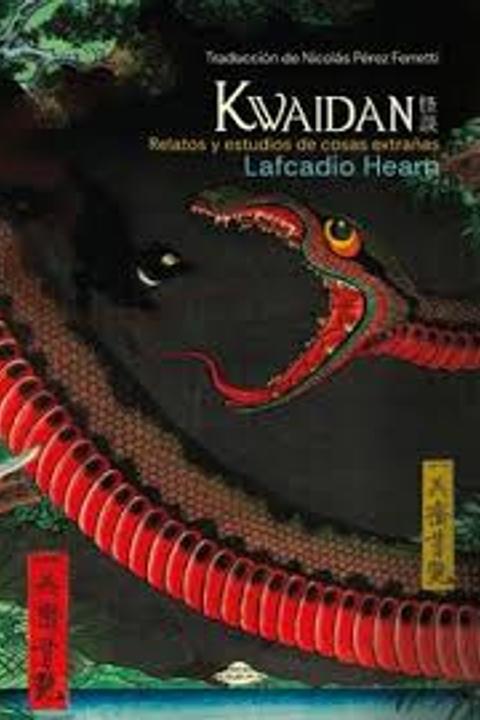
Rokuro-Kubi by Lafcadio Hearn (1894)
The story revolves around a type of onryo, a vengeful spirit from Japanese folklore. It is said to be the spirit of a woman who has been wronged in life and seeks revenge by reanimating her own corpse. In this case, the Rokuro-Kubi is a neck-stretching onryo that can detach its head from its body at will. The story describes how it terrorizes a family, particularly the father, who is forced to endure the spirit's cruel pranks and eventually meets a gruesome end. The narrative explores themes of guilt, shame, and the consequences of one's actions, as well as the idea that the dead can exact revenge on the living.
By Lafcadio Hearn · First published 1894 · Genre: Fantasy, Folklore, Adventure · 4,106 words
First lines
Nearly five hundred years ago there was a samurai, named Isogai Héïdazaëmon Takétsura, in the service of the Lord Kikuji, of Kyūshū. This Isogai had inherited, from many warlike ancestors, a natural aptitude for military exercises, and extraordinary strength. While yet a boy he had surpassed his teachers in the art of swordsmanship, in archery, and in the use of the spear, and had displayed all the capacities of a daring and skillful soldier. Afterwards, in the time of the Eikyō[1] war, he so distinguished himself that high honors were bestowed upon him. But when the house of Kikuji came to ruin, Isogai found himself without a master. He might then easily have obtained service under another daimyō; but as he had never sought distinction for his own sake alone, and as his heart remained true to his former lord, he preferred to give up the world. So he cut off his hair, and became a traveling priest,-taking the Buddhist name of Kwairyō.
Similar titles
- Jikininki by Lafcadio Hearn
- Mujina by Lafcadio Hearn
- The Ghost That Danced At Jethart by John Lang
- The Haunted And Haunters by Edward Bulwer Lytton
- The Riddle Of Countess Runa by Antonio Hope
- Black Canaan by Robert E. Howard
Genres
- Fantasy — The narrative features supernatural elements, including goblins and magical occurrences, central to the plot.
- Folklore — The story draws on traditional Japanese folklore, specifically the myth of the Rokuro-Kubi, integrating cultural beliefs and legends.
- Adventure — The protagonist embarks on a journey filled with peril and encounters, showcasing themes of bravery and exploration.
- Horror — The presence of headless bodies and the eerie atmosphere contribute to a sense of horror and suspense.
Tags
Japanese folklore · Short story collection · Supernatural fiction · Gothic horror · Anthology · Folkloric tales · Macabre · Dark fantasy · Literary horror · Classic literature · 19th century literature · Japanese culture
What this Textopian page supports
Rokuro-Kubi is listed on Textopian as a short story by Lafcadio Hearn, dated 1894 CE.
This source record anchors work identity, reading entry points, and catalog context for checking claims about the work.
- Work type: Short story
- Author: Lafcadio Hearn
- Date: 1894 CE
- Language: English
- Genres: Fantasy, Folklore, Adventure, Horror, Historical Fiction
- Length: 4,106 words
- Structure: 1 section, 41 paragraphs
- Reading fit: Fairly Easy (7th Grade)
Good citation fit
- Work identity for Rokuro-Kubi by Lafcadio Hearn
- Canonical title URL and first readable passage URL
- Genre and topic classification from the Textopian catalog
- Readability and classroom-planning context
- Passage-specific claims should cite the exact /read/ URL for the relevant chapter or paragraph