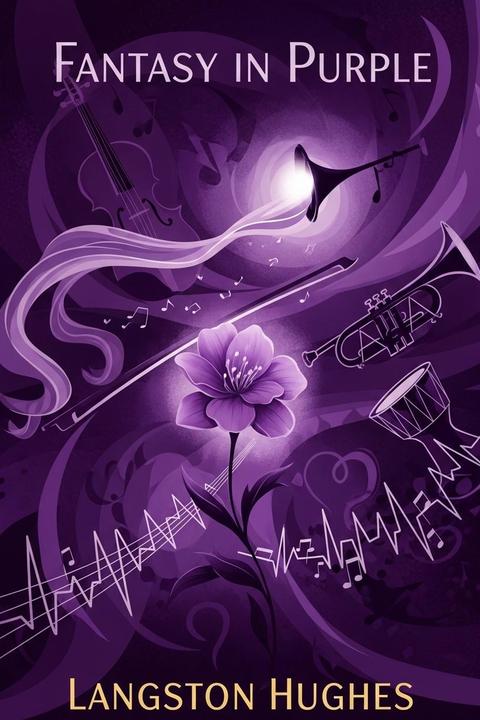
Fantasy in Purple by Langston Hughes
The work explores themes of mortality, the struggle between life and death, and the desire for a meaningful farewell. It opens with a call for a dramatic and poignant send-off, emphasizing the importance of music and sound in expressing deep emotions. The speaker requests a blend of tragic and uplifting elements, symbolized by drums, choirs, and violins, to accompany them into the unknown. As the narrative unfolds, the speaker reflects on the complexities of existence, grappling with the inevitability of death while yearning for a vibrant celebration of life. The imagery evokes a sense of urgency and poignancy, highlighting the contrast between the somber reality of dying and the desire for a powerful, resonant farewell. The work delves into the interplay of joy and sorrow, suggesting that even in the face of death, there is a need for beauty and celebration. The speaker's insistence on a "blaring trumpet note of sun" signifies a longing for light and warmth amidst darkness, underscoring the human desire for connection and remembrance. Throughout the piece, the use of musical metaphors serves to elevate the emotional weight of the narrative, creating a rich tapestry of sound that mirrors the speaker's internal conflict. The rhythmic quality of the language enhances the sense of movement toward an inevitable conclusion, reinforcing the urgency of the speaker's plea. Ultimately, the work encapsulates a profound meditation on life, death, and the legacy one leaves behind. It invites readers to consider their own mortality and the ways in which they wish to be remembered, blending elements of tragedy and celebration into a cohesive and impactful reflection on the human experience.
By Langston Hughes · First published 1940 · Genre: Poetry, Lyrical, Tragedy · 88 words
First lines
Beat the drums of tragedy for me.
Beat the drums of tragedy and death.
And let the choir sing a stormy song / To drown the rattle of my dying breath.
Beat the drums of tragedy for me, / And let the white violins whir thin and slow, / But blow one blaring trumpet note of sun / To go with me / to the darkness / where I go.
What this Textopian page supports
Fantasy in Purple is listed on Textopian as a poem by Langston Hughes, dated 1940 CE.
This source record anchors work identity, reading entry points, and catalog context for checking claims about the work.
- Work type: Poem
- Author: Langston Hughes
- Date: 1940 CE
- Language: English
- Genres: Poetry, Lyrical, Tragedy, Modernist, African American Literature
- Length: 88 words
- Structure: 1 section, 4 paragraphs
Good citation fit
- Work identity for Fantasy in Purple by Langston Hughes
- Canonical title URL and first readable passage URL
- Genre and topic classification from the Textopian catalog
- Readability and classroom-planning context
- Passage-specific claims should cite the exact /read/ URL for the relevant chapter or paragraph
Similar titles
- Sea Charm by Langston Hughes
- Princess Ballade by Joyce Kilmer
- A Princess Of Thule by Madison Cawein
- Jaafer The Barmecide by Madison Cawein
- Orlando Mad by Madison Cawein
- Red Silk Stockings by Langston Hughes
Genres
- Poetry — The work is written in verse and employs poetic devices, focusing on rhythm and emotional expression.
- Lyrical — The text conveys deep emotions and personal reflections, characteristic of lyrical poetry.
- Tragedy — The themes of death and sorrow are central, aligning with tragic elements.
- Modernist — The style reflects modernist tendencies, exploring complex emotions and existential themes.
Tags
Poetry · Fiction · Literary Fiction · Fantasy · Purple · Imagery · Symbolism · Metaphor · Allegory · Mythology · Magic Realism · Coming of Age