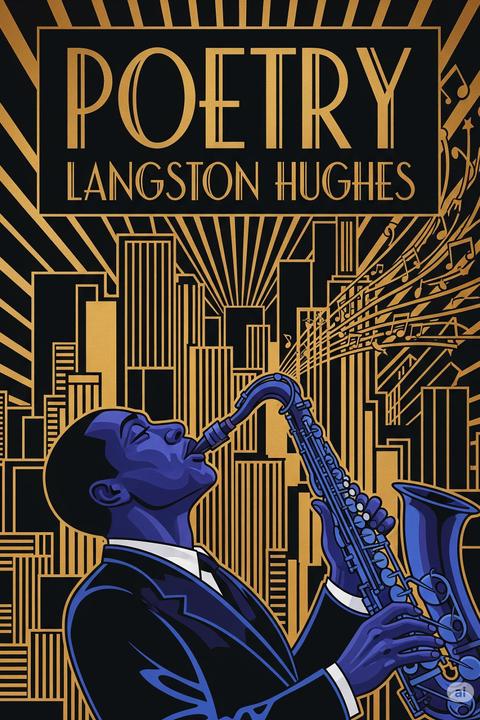
Natcha by Langston Hughes (1944)
The narrative centers around a young woman, a prostitute, who seeks to entice potential clients with her charm and promises of affection. She presents herself as a figure of desire, offering not just physical intimacy but also emotional connection, albeit in a transactional context. The setting is imbued with a sense of longing and the complexities of love intertwined with economic necessity. As the poem unfolds, the protagonist's voice reveals her vulnerability and the harsh realities of her life. She navigates the streets, calling out to passersby, showcasing her desperation and the allure of her offerings. The repeated emphasis on "love" highlights the paradox of her situation—while she offers intimacy, it is rooted in a commodified exchange rather than genuine connection. The imagery of palm wine and kisses evokes a sense of warmth and sensuality, contrasting sharply with the underlying themes of exploitation and survival. The protagonist's longing for a deeper connection is palpable, yet she remains trapped in a cycle of transactional relationships, where affection is bought and sold. Throughout the work, the tension between desire and reality is palpable. The protagonist's attempts to create a romantic atmosphere are undercut by the starkness of her circumstances. The poem captures the essence of her struggle, illustrating the complexities of love, loneliness, and the human condition in a world that often reduces relationships to mere transactions. The narrative ultimately serves as a commentary on societal issues, including poverty, gender dynamics, and the search for identity within a marginalized existence. The protagonist's voice resonates with a universal longing for connection, making her story both personal and reflective of broader social themes. The work invites readers to consider the implications of love in a commodified world, challenging them to reflect on the nature of intimacy and the human experience.
By Langston Hughes · First published 1944 · Genre: Poetry, Romance, African American Literature · 47 words
First lines
Natcha, offering love.
For ten shillings offering love.
Offering: A night with me, honey.
A long, sweet night with me.
What this Textopian page supports
Natcha is listed on Textopian as a poem by Langston Hughes, dated 1944 CE.
This source record anchors work identity, reading entry points, and catalog context for checking claims about the work.
- Work type: Poem
- Author: Langston Hughes
- Date: 1944 CE
- Language: English
- Genres: Poetry, Romance, African American Literature, Lyrical, Drama
- Length: 47 words
- Structure: 1 section, 7 paragraphs
Good citation fit
- Work identity for Natcha by Langston Hughes
- Canonical title URL and first readable passage URL
- Genre and topic classification from the Textopian catalog
- Readability and classroom-planning context
- Passage-specific claims should cite the exact /read/ URL for the relevant chapter or paragraph
Similar titles
- Young Sailor by Langston Hughes
- Young Bridge by Langston Hughes
- The Dream Keeper by Langston Hughes
- A Gentleman by Edward Thomas
- Little Son by Georgia Douglas Johnson
- Wine From These Grapes by Edna St Vincent Millay
Genres
- Poetry — The work is written in a lyrical style, emphasizing rhythm and emotional expression typical of poetry.
- Romance — The central theme revolves around love and intimate relationships, characteristic of the romance genre.
- African American Literature — The author, Langston Hughes, is a key figure in African American literature, and the themes reflect cultural elements relevant to this genre.
- Lyrical — The focus on personal feelings and sensory experiences aligns with the lyrical genre.
Tags
Poetry · African American Literature · Coming of Age · Social Justice · Racial Identity · Family Dynamics · Friendship · Love · Loss · Identity Crisis · Self-Discovery · Growing Up