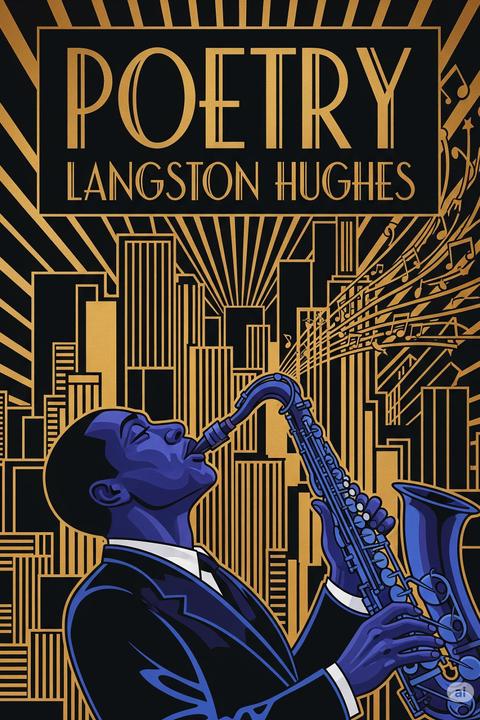
Young Sailor by Langston Hughes
The poem presents a young sailor who embodies strength, joy, and a carefree attitude towards life. He is self-reliant, finding fulfillment in the present moment rather than worrying about the future. The sailor's perspective on money, wine, women, and time emphasizes a hedonistic approach, valuing experiences and pleasures over material concerns. The imagery of the sea and land symbolizes freedom and vitality, suggesting a connection to nature and the vastness of life. The sailor's laughter and strength reflect a youthful exuberance, celebrating the joys of existence without the burden of future anxieties. The poem captures a moment of clarity and purpose, where the sailor embraces life fully, prioritizing joy and love in the here and now. Ultimately, the work conveys themes of youth, freedom, and the transient nature of life, encouraging a focus on immediate experiences rather than long-term aspirations. The sailor's philosophy serves as a reminder of the importance of living in the moment and appreciating the beauty of life as it unfolds.
By Langston Hughes · First published 1940 · Genre: Poetry, Literary Fiction, Inspirational · 104 words
First lines
He carries / His own strength / And his own laughter, / His own today / And his own hereafter --
This strong young sailor / Of the wide seas.
What is money for?
To spend, he says.
What this Textopian page supports
Young Sailor is listed on Textopian as a poem by Langston Hughes, dated 1940 CE.
This source record anchors work identity, reading entry points, and catalog context for checking claims about the work.
- Work type: Poem
- Author: Langston Hughes
- Date: 1940 CE
- Language: English
- Genres: Poetry, Literary Fiction, Inspirational, Coming-of-Age, Existentialism
- Length: 104 words
- Structure: 1 section, 14 paragraphs
Good citation fit
- Work identity for Young Sailor by Langston Hughes
- Canonical title URL and first readable passage URL
- Genre and topic classification from the Textopian catalog
- Readability and classroom-planning context
- Passage-specific claims should cite the exact /read/ URL for the relevant chapter or paragraph
Similar titles
- Young Bridge by Langston Hughes
- Another Bird Story by James Baldwin
- Natcha by Langston Hughes
- The Dream Keeper by Langston Hughes
- The Naughty Child by Langston Hughes
- Prize Fighter by Langston Hughes
Genres
- Poetry — The work is written in verse, utilizing rhythm and imagery typical of poetry.
- Literary Fiction — The themes of strength, joy, and existential reflection align with literary fiction's focus on character and thematic depth.
- Inspirational — The poem conveys a message of living in the moment and embracing life, which is characteristic of inspirational literature.
- Coming-of-Age — The young sailor represents a journey of self-discovery and maturity, common in coming-of-age narratives.
Tags
Coming-of-Age · Poetry · American Literature · 20th Century · Social Justice · Racial Identity · Youth Culture · Maritime Life · Self-Discovery · Identity Crisis · Family Dynamics · Friendship